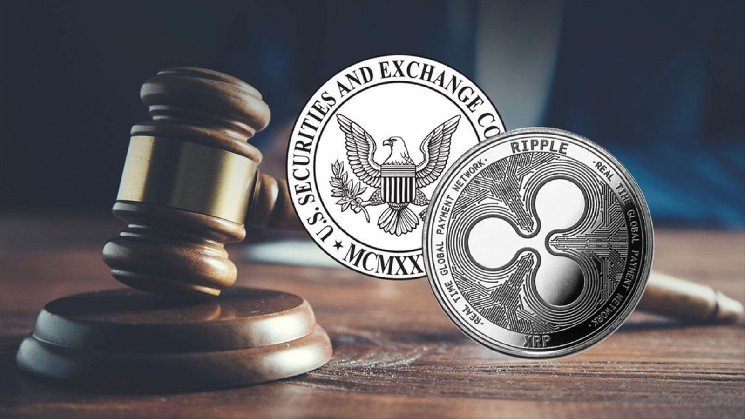
Today marks the three-year anniversary of what the digital asset community calls "The $XRP Victory Day".
On July 13, Judge Analisa Torres of the U.S. District Court for the Southern District of New York delivered a landmark summary judgment in the SEC v. Ripple Labs case, fundamentally reshaping the cryptocurrency regulatory landscape.
The historic ruling decisively declared that $XRP, in and of itself, is not a security.
The historic Torres ruling
The legal warfare initiated by the U.S. Securities and Exchange Commission (SEC) in December 2020 sought to classify all sales of $XRP as unregistered investment contracts.
Judge Torres's final ruling, however, rejected this attempt by relying on the decades-old Howey Test for modern digital assets.
Judge Torres ruled that Ripple’s programmatic sales of $XRP on public digital asset exchanges did not constitute the sale of securities. She concluded that retail buyers purchasing tokens on secondary markets through blind bid-ask auctions had no way of knowing their funds were going to Ripple. Consequently, these buyers could not have had a reasonable expectation of profits derived directly from Ripple's effort (hence, it failed a core prong of the Howey Test).
Conversely, the court sided with the SEC regarding direct institutional sales. Judge Torres ruled that Ripple’s $728 million in direct token sales to institutional players constituted unregistered securities offerings. These sophisticated parties were aware they were purchasing directly from Ripple (and their success depended on the company's efforts).
On the verge of a shutdown
In the meantime, recently surfaced statements from Ripple CEO Brad Garlinghouse and Chief Technology Officer David Schwartz confirmed that the company was seriously considering closing its doors. "We almost decided to shut down the company when the SEC sued us," Garlinghouse admitted. "We were like, you know, the government has infinite power and resources." This was due to advice from their lawyers, according to Schwartz.