In brief
- CME's FedWatch tool puts the odds of a 25-basis-point hike Wednesday at 94.5%, which would push the federal funds rate to 3.75%-4% from 3.50%-3.75%.
- A Wall Street Journal survey found nearly every major bank expects the September hike, with most forecasting 50 basis points of total tightening in 2026, and Bank of America, Deutsche Bank and RBC calling for 75.
- The move sets up a political clash: President Trump handpicked Fed Chair Kevin Warsh hoping for lower rates, not higher ones, and has spent the past two weeks publicly pressuring him not to hike.
Wall Street is bracing for the Federal Reserve to do something it hasn't done since 2023: raise interest rates.
The Federal Open Market Committee wraps up its two-day meeting Wednesday, and CME's FedWatch tool puts the odds of a quarter-point hike at 94.5%, up from under 50% a month ago.
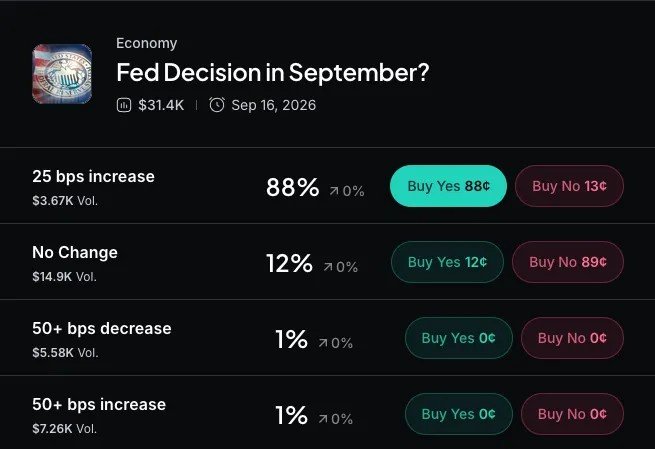
The shift from unlikely to near-universal happened fast. A Wall Street Journal survey published this week found nearly every major bank now expects a hike on Wednesday, with most, including Barclays, Citigroup, JPMorgan, Morgan Stanley and UBS, forecasting 50 basis points of total tightening by year-end.
Bank of America, Deutsche Bank and RBC are more hawkish still, calling for 75 basis points of tightening this year. Goldman Sachs sits at the dovish end of the hikers, penciling in just this week's quarter point and nothing more. Jefferies and Oxford Economics are the real outliers, forecasting a cut in December and in 2027, respectively.
Higher rates make borrowing more expensive, which slows spending and hurts assets that thrive on cheaper investments, like stocks and Bitcoin. It also makes safe government bonds pay better, pulling cash out of riskier bets. That said, it’s less about the hike itself and more about not knowing how many more are coming. Markets hate that uncertainty, so they’re repricing now, before the Fed even speaks.
Why the Fed is moving
The case for a hike rests on inflation that won't cooperate. Headline CPI ran at 3.4% annually in August, with core inflation at 2.5%, both comfortably above the Fed's 2% target. Oil prices, pushed higher by the ongoing conflict with Iran, have added a layer of price pressure that neither tariffs nor rate cuts can easily offset.
The Fed held rates steady at 3.50% to 3.75% in July, but that decision passed by just a 9-3 vote, with three policymakers already pushing for a hike then. That internal split, combined with a stronger-than-expected August jobs report, tilted the committee toward tightening heading into this week.
The hike puts Fed Chair Kevin Warsh in an uncomfortable spot. President Donald Trump handpicked Warsh for the job in January and, at his swearing-in in May, urged him to be "totally independent" while making clear he expected lower rates.
That hasn't happened—at least not by what Trump expected “totally independent” to be.
Trump, Vice President JD Vance, and Treasury Secretary Scott Bessent have all publicly pushed for cuts in the past two weeks, with Trump going as far as threatening to halt trade with countries running surpluses with the U.S. if rates don't come down. Warsh has said the president has had no influence on Fed decisions.
The hike lands two months before the November midterms, where polls already show voters frustrated with high prices and borrowing costs, and it's arriving in part because of the tariff and Iran-conflict policies Trump himself has championed.
Bond markets haven't waited for Wednesday. The 10-year Treasury yield touched 5.04% this week, its highest level since July 2007, as traders priced in both the hike and a longer stretch of elevated rates. The two-year yield, more sensitive to Fed policy, hit its highest level since July 2024.
Higher yields make Treasurys more attractive relative to risk assets and tend to strengthen the dollar, a headwind for assets like crypto that benefit from cheap money.
What it means for Bitcoin and altcoins
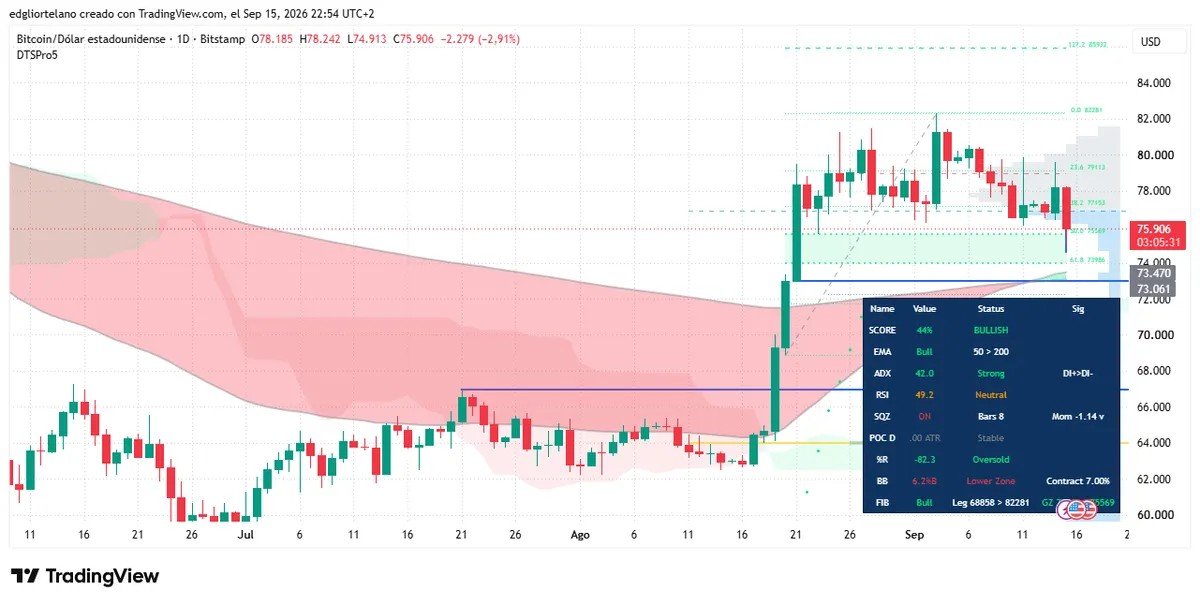
Crypto is walking into the decision already bruised. On Tuesday, Bitcoin swapped hands at around $75,700, down about 3.2% on the day after the Clarity Act, crypto’s long-awaited market structure bill, failed its Senate cloture vote. Bitcoin is now well off its September peak near $82,000.
BTC at $73,200 seems like the line in the sand: a daily close below it opens the door to $71,000, and even $66,900 based on technical indicators, cancelling the price explosion that also triggered Bitcoin’s current golden cross.
Not everyone reads a hike as purely bearish. Some analysts argue a quarter-point move aimed mainly at anchoring long-term Treasury yields, rather than genuinely tightening financial conditions, could leave crypto's medium-term picture largely intact. What matters most, in that view, is whether the decision and Warsh's tone in the press conference surprise markets relative to what's already priced in.
Higher-beta altcoins are expected to see sharper percentage swings than Bitcoin either way, given thinner liquidity and heavier leverage.
The Fed's statement and updated dot plot are due at 2 p.m. ET Wednesday, followed by Warsh's press conference at 2:30 p.m. ET, where traders will be watching for whether officials still pencil in just one more hike this year or something closer to the two additional moves Bank of America, Deutsche Bank, and RBC are now calling for.