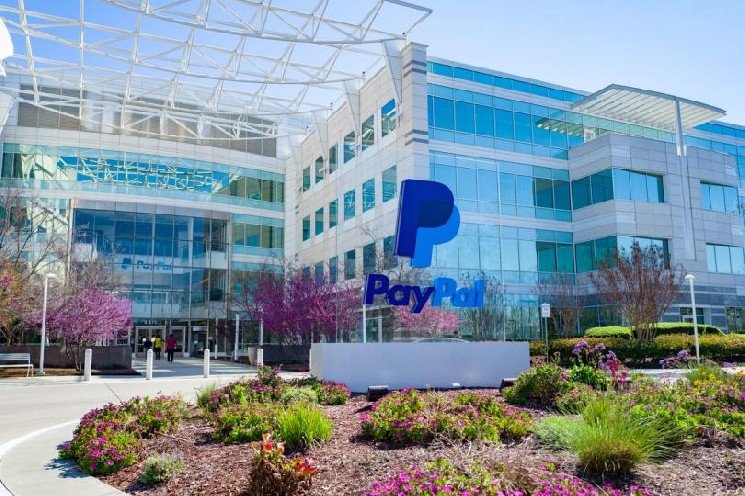
A potential $53 billion acquisition of PayPal (PYPL) by payments rival Stripe has reignited debate over what holds the keys to the next generation of digital payments.
While both companies are giants in the fintech and payments industries, the strategic logic behind the acquisition is particularly compelling through the lens of stablecoin and blockchain.
Stablecoins are digital tokens pegged to the value of traditional financial assets like fiat currencies and have become one of the most prominent areas in which cryptocurrency has pushed further into the mainstream in recent years, partly because of companies like Stripe and PayPal, as well as the introduction of formal regulatory regimes in the U.S. and elsewhere.
PayPal has more than 400 million active consumer accounts, owns mobile payment service Venmo and is one of the world’s most recognizable checkout logos. Between them, Stripe and PayPal would unite merchant acceptance and consumer reach, potentially sending mainstream stablecoin acceptance into another stratosphere.
While PayPal still has to publicly respond to the takeover offer, digital asset industry commentators see the underlying infrastructure consolidation as the most significant angle in the acquisition if it comes to pass.
"The name on the front of the wallet means far less than whose infrastructure clears the payment behind it," Torab Torabi, CEO of stablecoin infrastructure firm Movement Labs, told CoinDesk.
Stripe has been active in expanding its provision for stablecoin infrastructure in recent years, first through the acquisition of Bridge for $1.1 billion in 2024 and, more recently, the introduction of its own blockchain network Tempo last year.
It is also one of many major firms to join the stablecoin consortium Open USD last month. The digital dollar project, which also involves Coinbase (COIN), Mastercard (MA), Visa (V) and BlackRock (BLK), is built to rival Circle’s USDC as the stablecoin of choice for financial institutions and businesses.
Fate of $PYUSD
One immediate question raised by a potential acquisition of PayPal is the fate of $PYUSD, the dollar-backed stablecoin of which PayPal is the primary distributor.
“The incremental addition of $PYUSD would produce the first fully vertically integrated private digital dollar stack in the market, encompassing issuance and reserve management, settlement and movement rails and enterprise merchant processing,” Citi said in a research note.
“Stripe has previously committed to OpenUSD as its default checkout stablecoin for its merchant base. A consolidated $PYUSD deployment could challenge that commitment, establishing a proprietary commerce-layer stablecoin with simultaneous captive supply-side (millions of Stripe merchants) and demand-side (440 million consumer wallets) distribution.”
StripeStablecoins AI Disclaimer: Parts of this article were generated with the assistance from AI tools and reviewed by our editorial team to ensure accuracy and adherence to our standards. For more information, see CoinDesk's full AI Policy. Latest Crypto News
- 1 Visa backs Open USD with new stablecoin platform as Circle faces fresh competition29 minutes ago
- 2 Keyrock acquires BlockFills trading assets to expand institutional crypto business1 hour ago
- 3 The Clarity Act is the most important consumer protection effort in years1 hour ago
- 4 Crypto for Advisors: Strengthening defenses against AI fraud1 hour ago
- 5 Crypto brokerage firm Alpaca raises $135 million for tokenized stock infrastructure2 hours ago
- 6 Ledger wants AI agents to manage crypto without holding your keys3 hours ago
- 7 Galaxy targets institutional stablecoin yield with new DeFi vaults4 hours ago
- 8 The most popular bitcoin call option has slipped by $10,0005 hours ago
- 9 Inside the high-stakes race to build an open financial system specifically for AI bots5 hours ago
- 10 Bitcoin pulls back to $64,000 after hitting monthly high as bears take control6 hours ago
 Latest Research
Gate Leads Spot Market Share Gains as CEX Volumes Rise for First Time in Five Months

Gate Leads Spot Market Share Gains as CEX Volumes Rise for First Time in Five Months
CEX trading volumes rose for the first time in five months in June, with spot climbing 15.3% to $1.11T and RWA perpetual volumes surging to a record $311B.
By CoinDesk Research Jul 13, 2026CEX trading volumes rose for the first time in five months in June, with spot climbing 15.3% to $1.11T and RWA perpetual volumes surging to a record $311B.
Why it matters:
CEX trading volumes rose for the first time in five months in June, with spot climbing 15.3% to $1.11T and RWA perpetual volumes surging to a record $311B.
View Full Report More From Finance
Visa backs Open USD with new stablecoin platform as Circle faces fresh competition

Keyrock acquires BlockFills trading assets to expand institutional crypto business