On the 18th of August, an outrage sparked regarding reports of unexpected deposits, raising fresh concerns around $HTX.
This came after recipients using the exchange platform reported receiving small transfers they never initiated. According to on-chain data, the activities showed recurring Tether [$USDT] payments ranging between 3 and 10 $USDT.
The similar amounts and closely grouped timing point toward a repeated transfer pattern rather than typical exchange withdrawals. That pattern becomes significant because several recipients reportedly faced account freezes soon after the deposits arrived.
What stood out is that many of those who received these deposits reported being frozen out of their accounts shortly after receipt of the deposits.
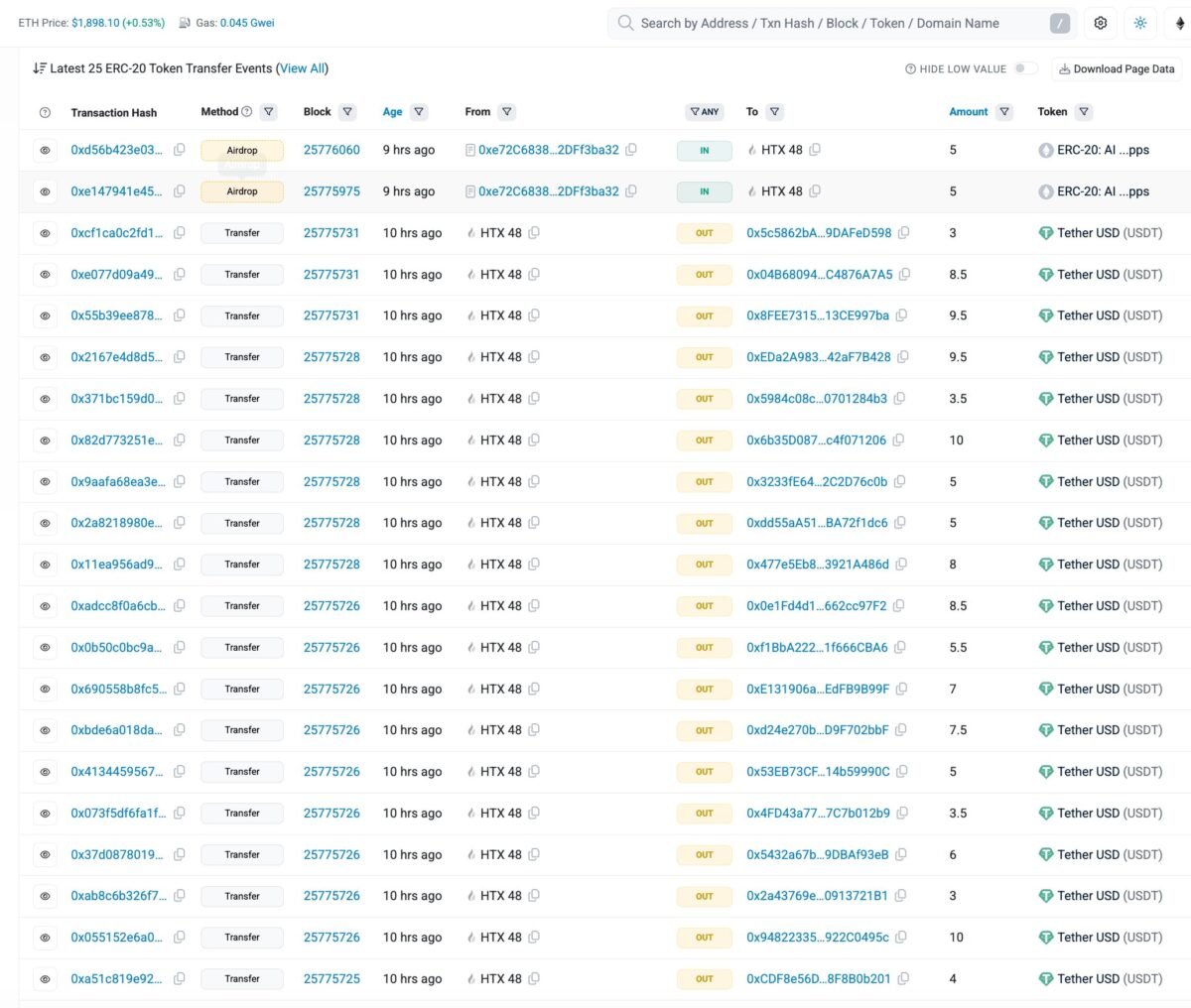
In fact, even small $USDT transfers related to $HTX may automatically initiate account review processes by the receiving exchanges. This is due to sanctions imposed on the platform.
Still, wallet labels cannot confirm who initiated them. Yet, matching transaction hashes, sender addresses, and recipient cases would establish whether one source connects the incidents.
$HTX denies initiating unexplained transfers
In response to growing confusion regarding these unknown smaller transfers, $HTX officially clarified the origin of such transactions.
According to the exchange, none of their official platforms were responsible for the deposits. Moreover, they denied that any of their associated testing programs initiated said deposits.
However, each of the many deposits that carried the “$HTX” tag as an identifier suggests an alternative explanation with respect to ownership and control.
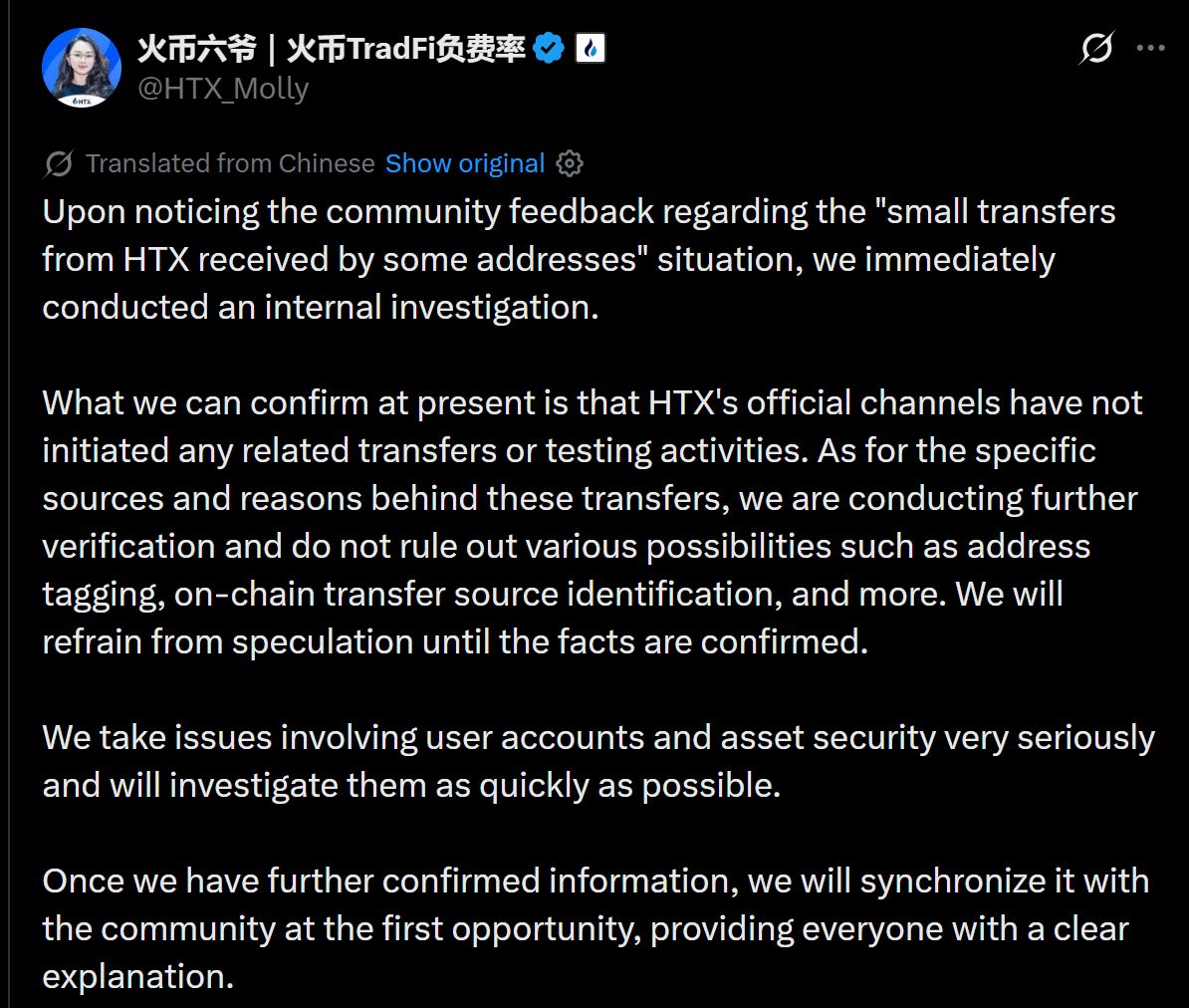
$HTX says it is investigating possibilities including address tagging and on-chain source identification, leaving attribution unresolved. That makes transaction history the stronger test, as repeated funding links could establish whether the platform controlled the sending wallets.
If evidence emerges indicating $HTX was in fact controlling the sending wallets, then scrutiny will increase regarding the claim.
However, if there are errors or incorrect attributions of sending wallets, then these may be able to provide a reason as to why some transfers had the $HTX label.
$HTX transfers face heightened sanctions scrutiny
The timing of the reported transactions further clarifies the compliance implications since $HTX was subject to restrictions prior to the reported events. On the 26th of May, the U.K. placed an asset freeze and payment restriction regarding $HTX-linked activities.
The E.U. then scheduled the prohibitive transaction ban for the 23rd of August. This increased the regulatory scrutiny with which exchanges would be operating by the time they received the unauthorized transfers on the 18th of August.
This also explains how even seemingly insignificant, small $HTX-linked transfers may have been viewed under heightened scrutiny. It’s less likely about the size of a deposit and more likely about what appears to be the origin of those funds.
Still, confirming ownership of those sending addresses remains essential before connecting individual freezes directly to the exchange platform.
Final Summary
- $HTX-linked transfers triggered account freezes, while their source remains unverified.
- $HTX denies involvement as UK and EU restrictions increase compliance scrutiny.