Ethereum’s $ETH token is shifting its usage, moving from exchange-based speculation to on-chain activity. Whale accumulation and global demand expand, while exchange reserves are still contracting.
Ethereum is showing a shift in demand for $ETH, from US-based trading and speculation to growing global demand and on-chain usage.
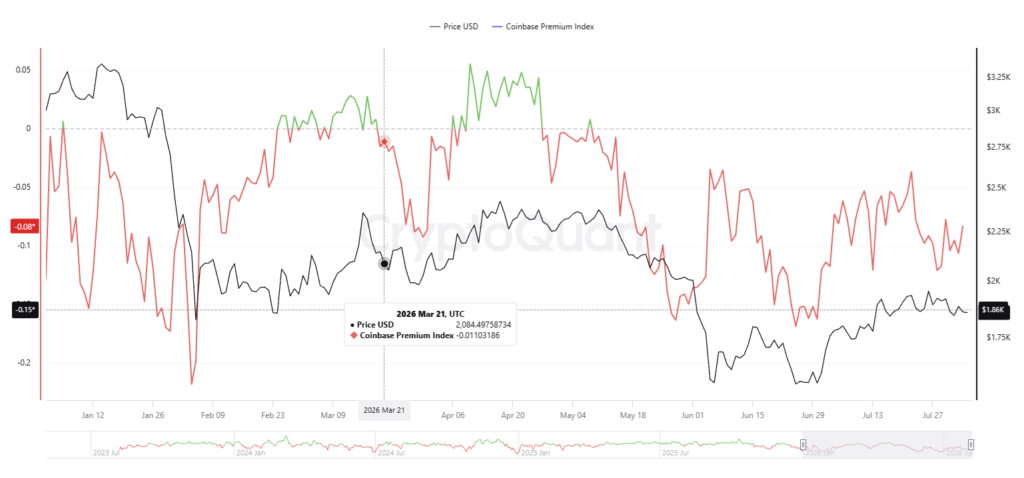
The signal of decreased US demand is the Coinbase premium index, which has been mostly negative throughout 2026. $ETH open interest is also almost flat at $11.37B, showing weaker demand for speculative trading.
$ETH remains close to the $1,900 range, recently slowing down to $1,889.80. $ETH showed few signs of rallying but still achieved an 18.5% gain in July, its best month year to date.
The token shows rising demand for on-chain activity, as DeFi lending is showing signs of recovery. $ETH remains one of the strongest collaterals for DeFi protocols, keeping liquidity within the ecosystem.
As a result, $ETH demand and withdrawals caused premium prices on Binance, compared to Coinbase. $ETH demand from US institutions slowed down in the summer of 2026, as there is little demand for digital treasury companies.
Global projects, however, still acquire $ETH and withdraw from Binance, while boosting staking and other on-chain activities.
$ETH on-chain demand and activity are rising
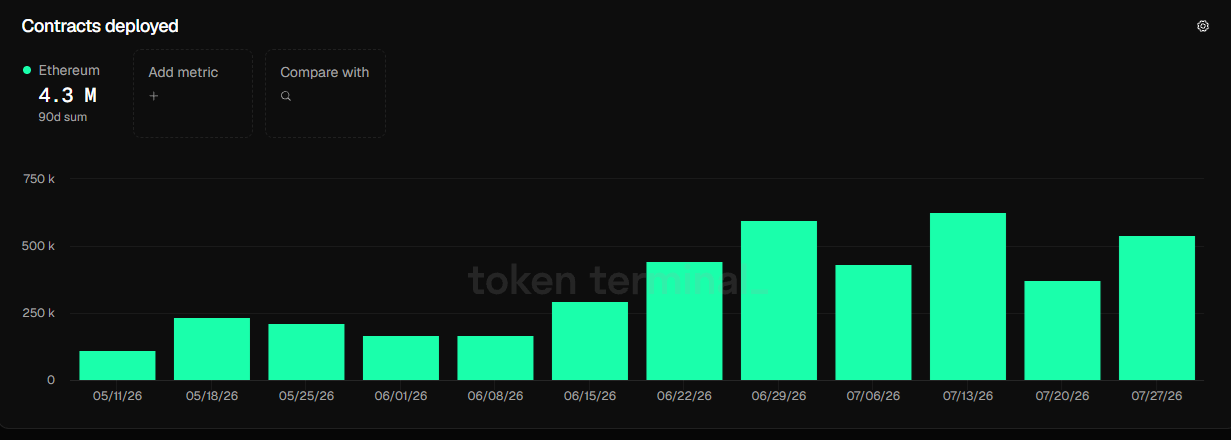
In the second quarter of 2026, Ethereum showed a rise in new contract deployment. Over 500K new contracts were deployed in the last week of July. One of the main reasons for the increased activity is the extremely low gas prices on Ethereum, which makes on-chain activity viable again.
Contract deployers also increased at the end of July to 14.9K, according to Token Terminal data. The busiest category was DeFi contracts, based on $ETH burns. The SeaDrop NFT contract was also the busiest as of August 3. Unnamed contracts and new projects also accelerated.
Ethereum is still a settlement layer for tokens, tokenized securities, wrapped BTC, and other assets. L2 activity has also slowed down, with stablecoins moving back to Ethereum.
The on-chain Ethereum activity shows an attempt to revive decentralized crypto opportunities. Retail traders are still seeking those opportunities, without falling prey to whales or market makers. For now, the recovery is relatively small, but it shows that crypto activity can still return to liquidity venues.
Some of the most active tokens on Ethereum included DAI, SHIB, CRO, PAX Gold, and ONDO, as well as stablecoin USDT. The activity shows a mix of legacy usage and a new shift to tokenized real-world assets (RWA).
Whales accumulate $ETH, but remain cautious
$ETH is showing demand for accumulation, staking, and taking tokens off exchanges. At the same time, whales are still more bearish compared to retail traders.
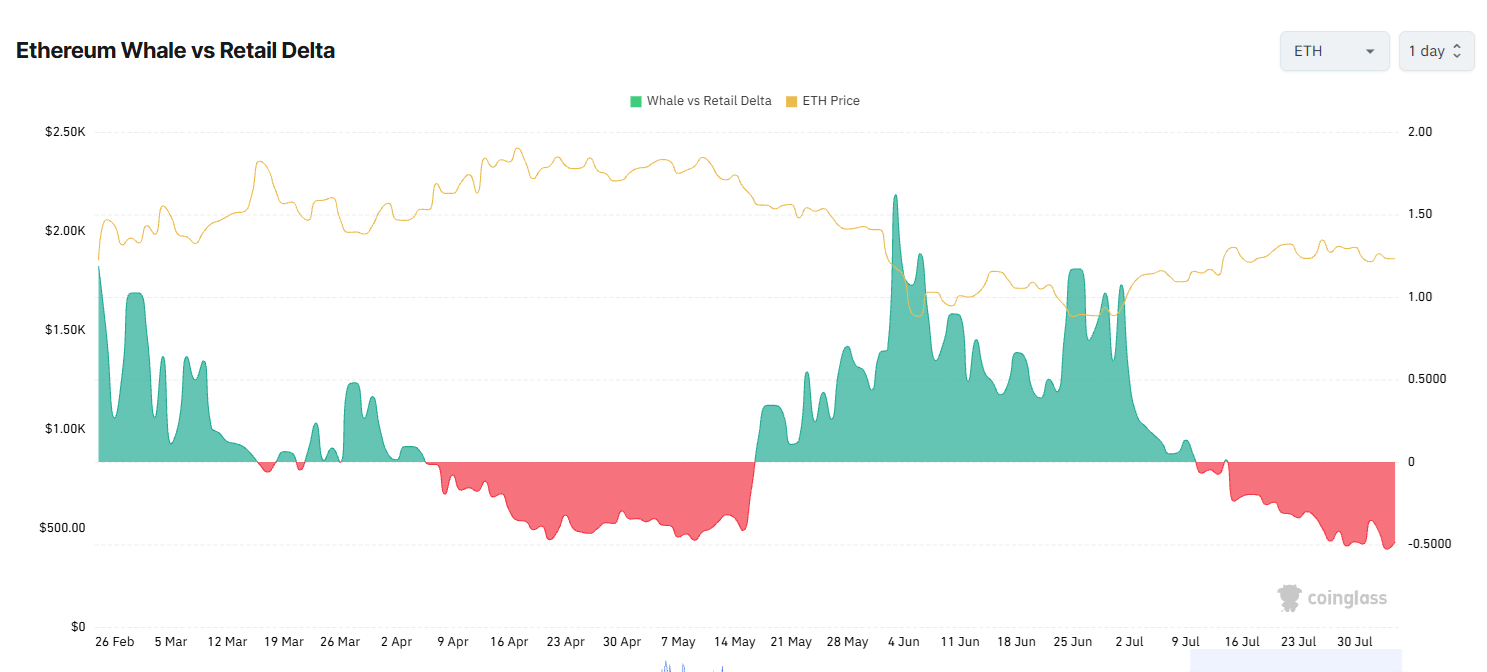
Despite this, for the past month, whales have shown signs of accumulating $ETH. One whale withdrew 112K $ETH and started sending it to the staking Beacon Chain contract.
Additionally, Bitmine staked 150,120 $ETH, currently locking up over 87% of its treasury holdings.
The Ethereum validator exit queue is also almost empty, with just 6.6 $ETH waiting for withdrawal. Over 2.4M $ETH are waiting to be staked and start receiving rewards.