A mantra among long-term investors is to buy when markets are panic selling, and several indicators show Bitcoin ($BTC) might be in a prime accumulation zone.
Bitcoin indicators signal a strategic entry window
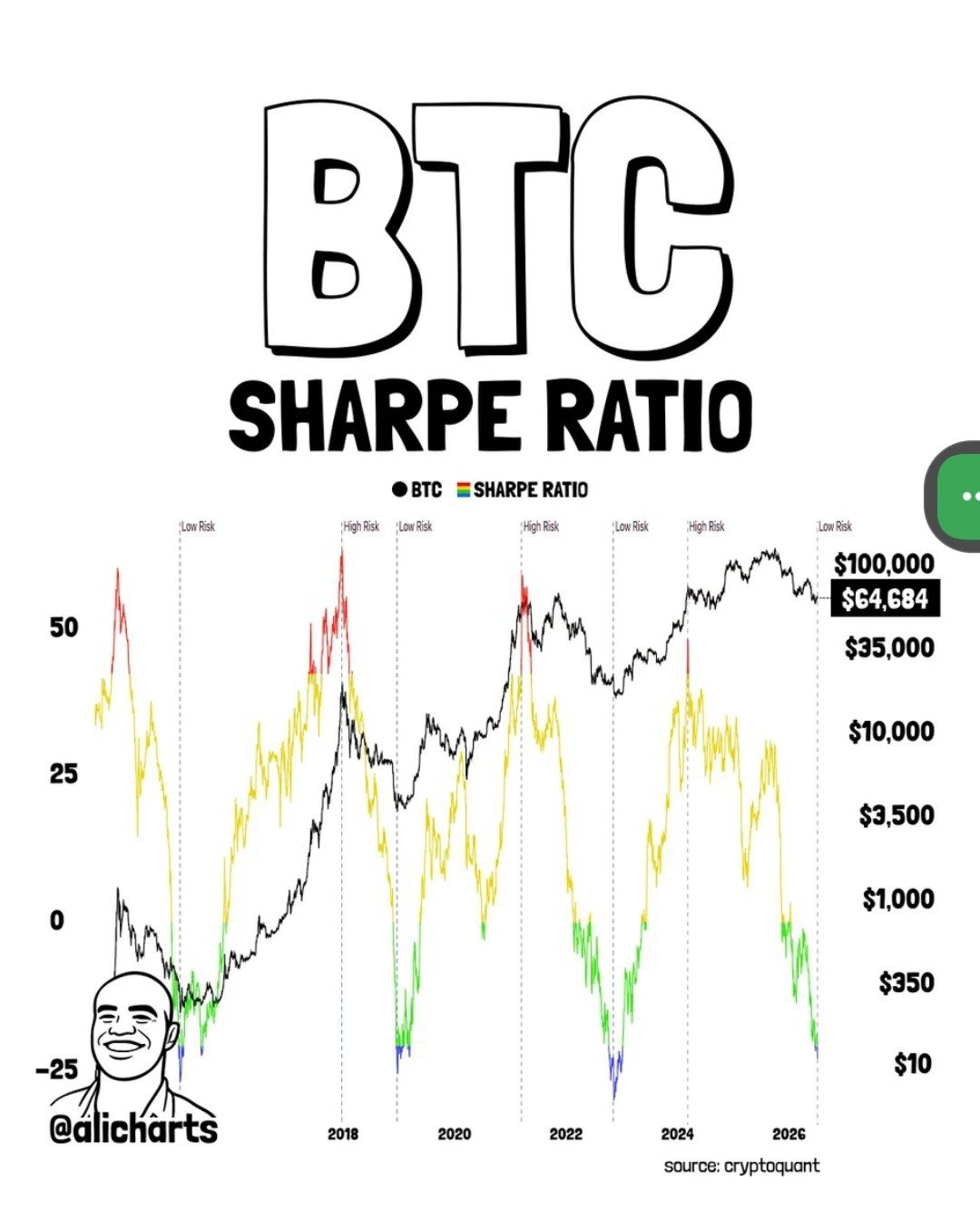
The first is the Sharpe Ratio, which is currently at -23. Sharpe ratio is an indicator that measures the risk-to-reward ratio. The higher it is, the greater the return on investment is and vice versa.
While considered rare statistical anomalies, extremely low readings of -20 to -23 signal a prime accumulation zone. They typically indicate the exhaustion of sell-side pressure and a reset in the risk/reward dynamic.
Source: CryptoQuant
Even more, the indicator has a pristine track record, showing cyclical pivots occurred after it fell to -20 or below. This happened in 2015, 2018-2019, and 2022-2023, during which it signaled macro bottoms and the onset of bull runs.
The catch
While the Sharpe Ratio holds a proven history of excellence, it is a lagging indicator. Once it shows, what follows are multiple months of consolidation before the trend flips upwards. The upside of this is that it allows gradual whale accumulation through Dollar Cost Averaging (DCA).
Supporting indicators and on-chain metrics
Several other indicators support the above macro accumulation zone theory. One is the Bitcoin Fear & Greed Index, which currently reads Fear. Another is the late June drop of the 200-week Simple Moving Average (SMA) below the then $BTC price.
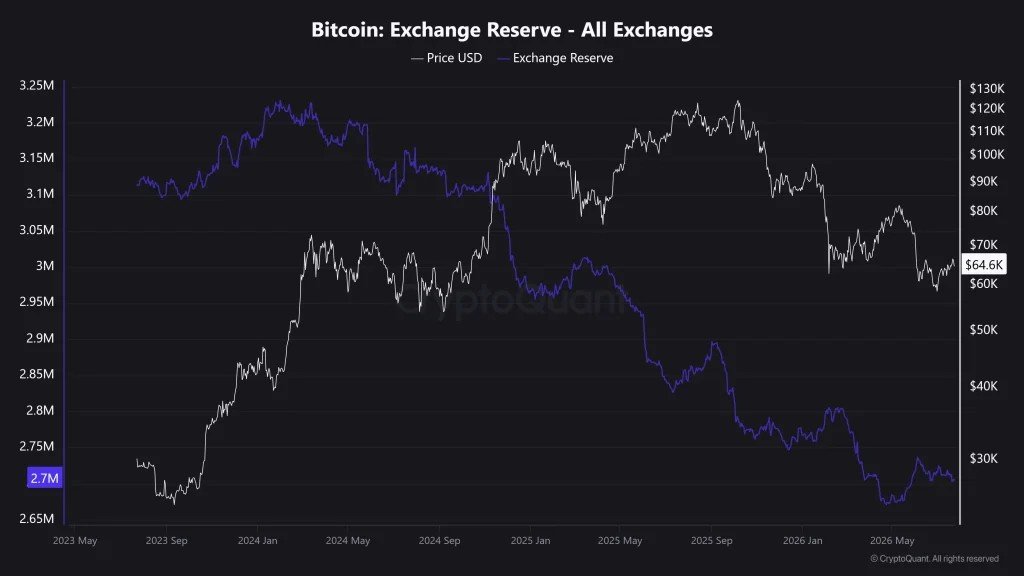
As for on-chain metrics, Bitcoin reserves in exchanges have been gradually declining, signaling a shift to long-term storage.
Source: CryptoQuant
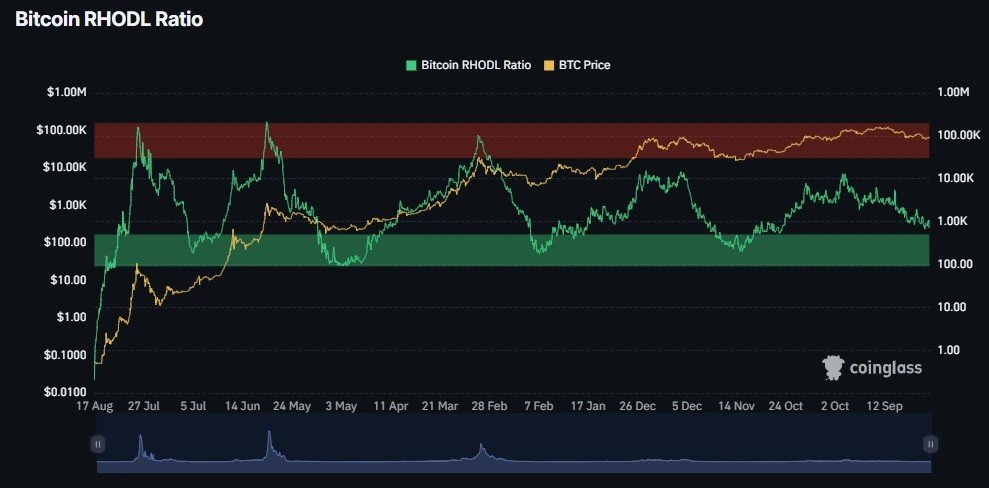
Furthermore, the Realized HODL (RHODL) ratio is moving into the green band, signaling wealth rotation from short-term to long-term HODLers.
Source: CoinGlass
At press time, Bitcoin was trading at $64,710, down 1.47% in the day due to pressures from rising US bond yields and Middle East tensions. Near-term boosters include passage of the CLARITY Act into law before the August recess, while headwinds include an escalation of the US-Iran conflict.