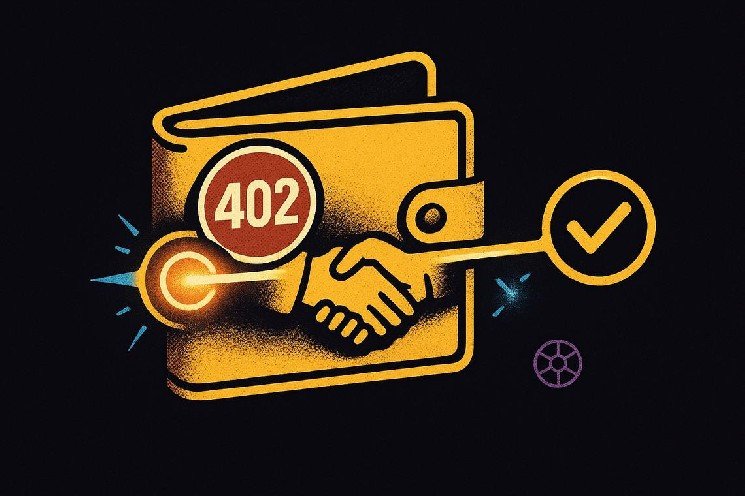
On July 13, 2026, Binance Agentic Wallet quietly pushed out something that could reshape how AI agents pay for things on the internet. The integration of the Binance x402 payment protocol into the Agentic Wallet gives AI systems a standardized, on-chain method to purchase services — from data feeds to premium compute — without prepaid subscriptions, manual key management, or surrendering custody of funds.
Key takeaways
- Binance Agentic Wallet added support for the x402 payment protocol on July 13, 2026, enabling AI agents to make on-chain, pay-per-use payments.
- x402 is an HTTP-native protocol that requires no account registration, card checkout, or pre-funded balances.
- Every payment moves directly from buyer to seller — facilitators verify and settle without ever holding funds.
- The x402 payment skill is live via Binance Wallet Skills, requiring no custom payment code to deploy.
- Supported networks include $BNB Chain, Base, and Solana.
Binance Agentic Wallet Introduces x402 Protocol Support
The core promise of x402 is deceptively simple: an AI agent should be able to pay for something on the internet the same way it sends any other HTTP request — without friction, without pre-registration, and without a human in the loop.
That’s what makes the Binance Wallet Skills integration significant. Developers and users who install the x402 payment skill gain immediate access to this capability without writing a single line of custom payment code. Once installed, the skill manages the entire payment lifecycle — from parsing the initial 402 response and confirming the transaction, to signing, replaying the request, and returning the settlement result.
Phase 1 of the x402 payment skill is now live, covering the full buyer-side payment flow.
How the x402 Protocol Works for On-Chain Pay-Per-Use
x402 is built on a protocol mechanic that web developers will recognize immediately: the HTTP 402 “Payment Required” status code, which has existed in the HTTP specification for decades but remained largely unused. x402 gives it a concrete function.
AI Agents and the Payment Request Lifecycle
When an AI agent attempts to access a paid resource, the seller responds with an HTTP 402 status alongside its payment requirements. The agent then signs an off-chain authorization and retries the request with proof of that payment. No account is needed. No card checkout. No pre-funded balance sitting idle.
The entire interaction happens programmatically, meaning AI systems can transact for services autonomously — a genuinely new capability for the emerging agent economy.
Off-Chain Authorization and On-Chain Settlement
A facilitator sits between the agent and the blockchain. Its job is precise: verify that the signed payment meets the seller’s requirements, submit the transaction to the blockchain, monitor for confirmation, and return the result. What it never does is hold funds. Every payment follows a direct, non-custodial fund flow — money moves straight from buyer to seller, and the facilitator’s role is purely technical.
Where the infrastructure supports it, gas handling may also be abstracted away by the facilitator or settlement layer, reducing friction further.
Operational Roles and Compliance in x402 Payments
The facilitator model has a deliberate structural boundary: x402 facilitators operate as technical service providers, kept entirely separate from Binance Pay flows. This distinction matters operationally — it prevents conflation between the agentic payment rail and Binance’s traditional payment services.
Security Measures and Built-In Risk Controls
Binance didn’t ship this without guardrails. The x402 payment skill draws on the Agentic Wallet’s existing compliance infrastructure, which includes sanctions screening, transaction monitoring, and built-in transaction limits. These controls apply automatically to agent-initiated payments, keeping the system compliant without requiring users to configure anything separately.
That’s the underlying tension worth watching here: as AI agents gain the ability to spend money autonomously and continuously, the question of who bears responsibility for a bad transaction becomes real. Binance’s approach — layering compliance controls directly into the wallet infrastructure rather than leaving it to developers — signals a calculated position on that question.
Blockchain Networks Supported by the x402 Protocol
The protocol currently runs across three networks:
- $BNB Chain — via the B402 facilitator
- Base — via third-party facilitators
- Solana — via third-party facilitators
The multi-chain approach means the x402 integration isn’t locked to Binance’s own ecosystem. By opening Base and Solana support through third-party facilitators, the protocol has room to expand as the facilitator network matures.
What the launch ultimately represents is a foundational piece of infrastructure for the agent economy — a way for software to pay for software, autonomously, without human intermediaries, and with compliance controls baked in from day one. How fast developers build on top of it will determine whether x402 remains a wallet feature or becomes a standard the broader industry coalesces around.
FAQ
What is the x402 payment protocol?
x402 is an HTTP-native, on-chain payment protocol that enables wallet-based, pay-per-use transactions without requiring prepaid balances or account registration. It repurposes the HTTP 402 status code to trigger automated, on-chain payments.
How does the payment process work with the x402 protocol?
An AI agent requests a paid resource; the seller responds with an HTTP 402 status and its payment requirements; the agent provides an off-chain payment authorization; a facilitator then verifies the payment and settles it on-chain, returning the result to the seller.
What role do facilitators play in the x402 payment system?
Facilitators verify that payments meet the seller’s requirements, submit them to the blockchain for settlement, and monitor for confirmation. They never hold funds or act as custodians — their role is entirely technical.
Which blockchain networks are supported for x402 payments on Binance Agentic Wallet?
The protocol currently supports $BNB Chain (via the B402 facilitator), Base (via third-party facilitators), and Solana (via third-party facilitators).
Article produced with the assistance of artificial intelligence and reviewed by the editorial team.