
Bitcoin [$BTC] has fallen by 3.21% in the past 24 hours, after facing rejection at the $64.6k local resistance zone. This was the same area that rebuffed the bulls a week ago.
The price downturn has led to $373.58 million in liquidation across the market, with Bitcoin seeing $107.32 million in long and short liquidations.
AMBCrypto reported that extreme fear ruled the market and had warned that derivatives demand was surging while spot demand was lacking. This spot-versus-derivatives divergence has naturally led to a correction.
Bitcoin excess leverage is being flushed
A measured wave of profit-taking saw the 100-1,000 $BTC-holding cohort sell 67,000 Bitcoin on July 13. This did not signal market panic, and the derivatives signals agreed.
Crypto analyst Axel Adler Jr. observed that Open Interest was falling as prices also declined. However, market participants were not aggressively building short positions yet.
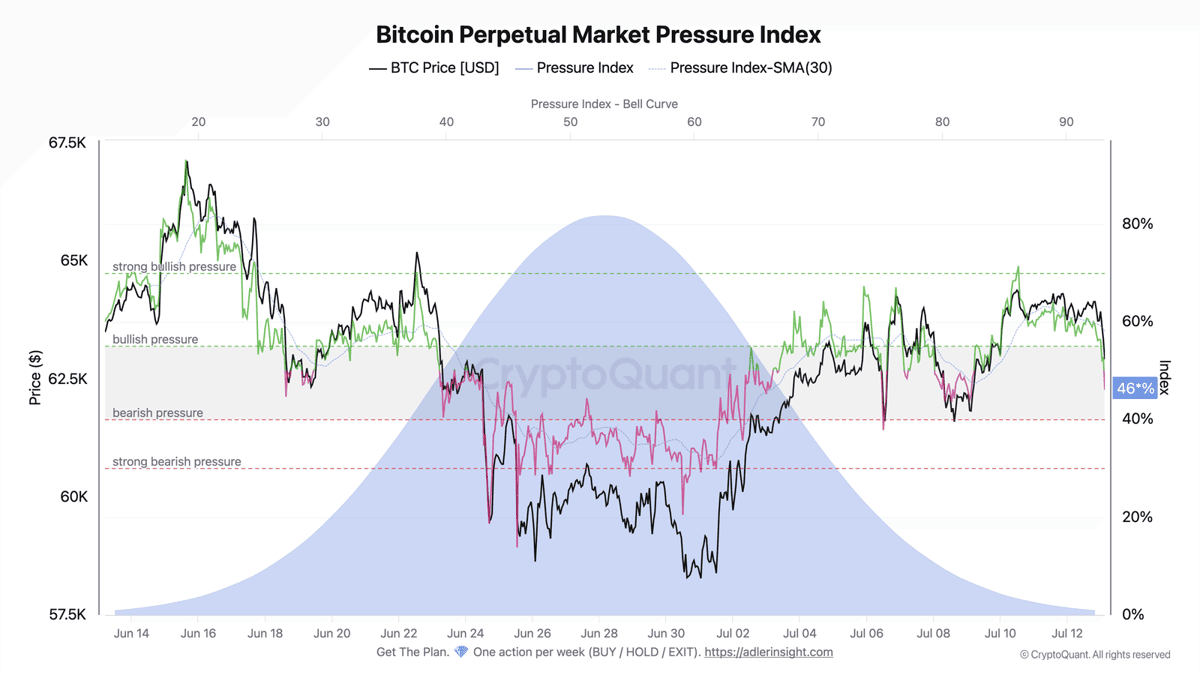
The Bitcoin Perpetual Market Pressure Index is a composite of price, net taker flow, open interest, and volume delta. It combines these factors into a single scale from 0 to 100.
The metric had fallen 11 points to 46 in just over 24 hours. It had been at 61, but has since fallen below 50, and the 30-day moving average is at 58.
This meant the buying pressure was weakening, and the index would need to reclaim the 30-day moving average to signal that buyers were back in control.
Additionally, the analyst demonstrated that the steady OI drop during the drop signaled long positions were being closed. This reinforced the idea of weak demand in the market and was a mark of leverage reduction.
The current downturn was not as dangerous as a full-blown, aggressive short-selling move would be.
The long-term lens
AMBCrypto had reported that stablecoin outflows could leave $BTC vulnerable to heightened volatility. The recent price drop was not one such moment, but steady selling pressure and a lack of demand could push the market towards a tipping point.
In a post on CryptoQuant Insights, analyst Moreno wrote that the Bitcoin/Stablecoin reserve ratio had fallen to its lowest in this cycle.
The concentration of buying powder in the form of stablecoins on Binance, combined with the relatively low 8-9% of exchange-held $BTC balance on this exchange, was proof of an extreme liquidity imbalance.
Investors preferred to remain defensive rather than deploy their capital until prices reach a more attractive level.
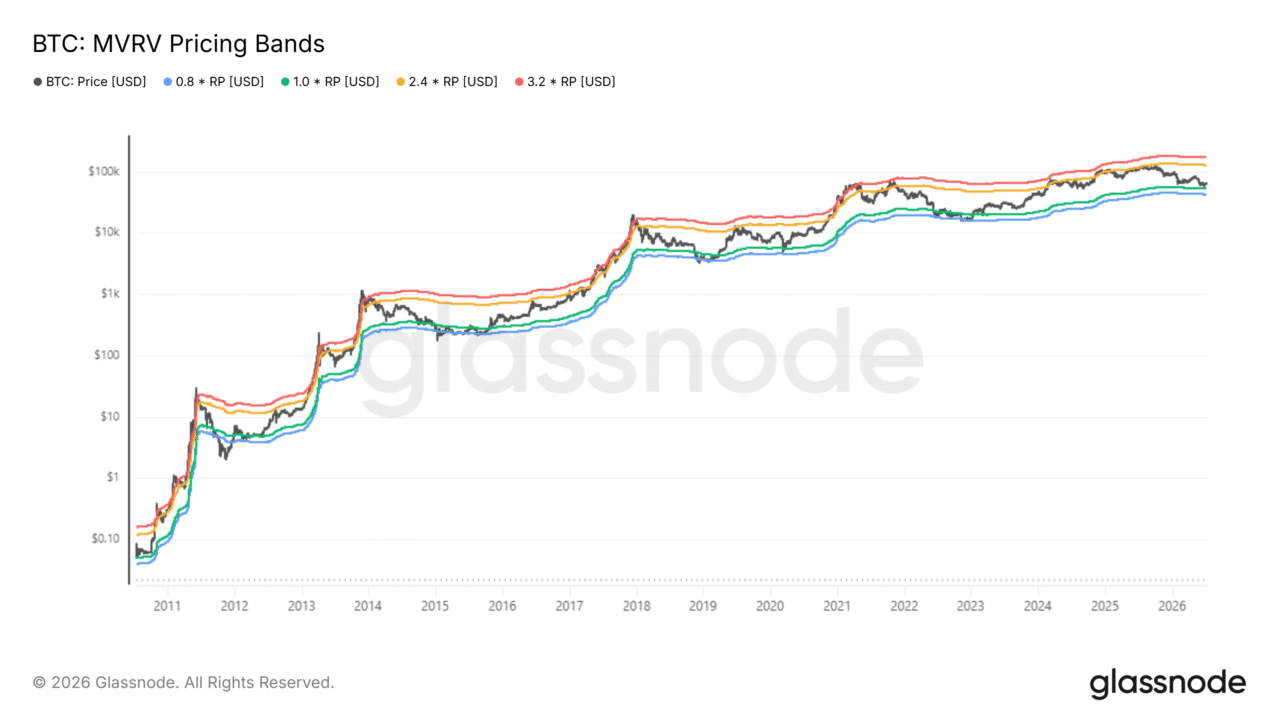
The Bitcoin MVRV pricing bands assess whether the leading crypto is overvalued or undervalued, based on the average investor’s cost basis, or realized price.
Historically, each cycle has seen the price drop to 0.8 times the cost basis, or lower, before recovery. At the time of writing, this was at $42,429.
Such a deep drop could be what defensive investors are waiting for before deploying their capital.
Final Summary
- The recent Bitcoin sell-off was a measured wave of profit-taking and long positions closing, not a panicked move.
- There was a concentrated stablecoin supply on Binance, possibly waiting for a deeper price drop before being deployed.