After consolidating within a narrow range early in July, DeXe [$DEXE] skyrocketed to a new all-time high of $49.40. The rally was driven by the successful rollout of the Dexelization AI integration upgrade, which triggered the move to $ATH.
The upgrade embeds specialized AI agents into the protocol infrastructure, enabling AI and users to collaborate in operation and management. However, the market buzz around it faded after the altcoin reached $ATH, resulting in a rejection. Since then, the altcoin has printed four red candles, closing at new lows each day.
At press time, $DEXE traded around $34, down 9.85% on the daily charts. Over the same period, altcoin volume jumped 58% to $158 million, suggesting intense selling pressure.
$DEXE whales are making moves
Interestingly, after $DEXE began to decline, whales re-entered the market. Spot Average Order Size data from CryptoQuant showed Big Whale Orders for three consecutive days.
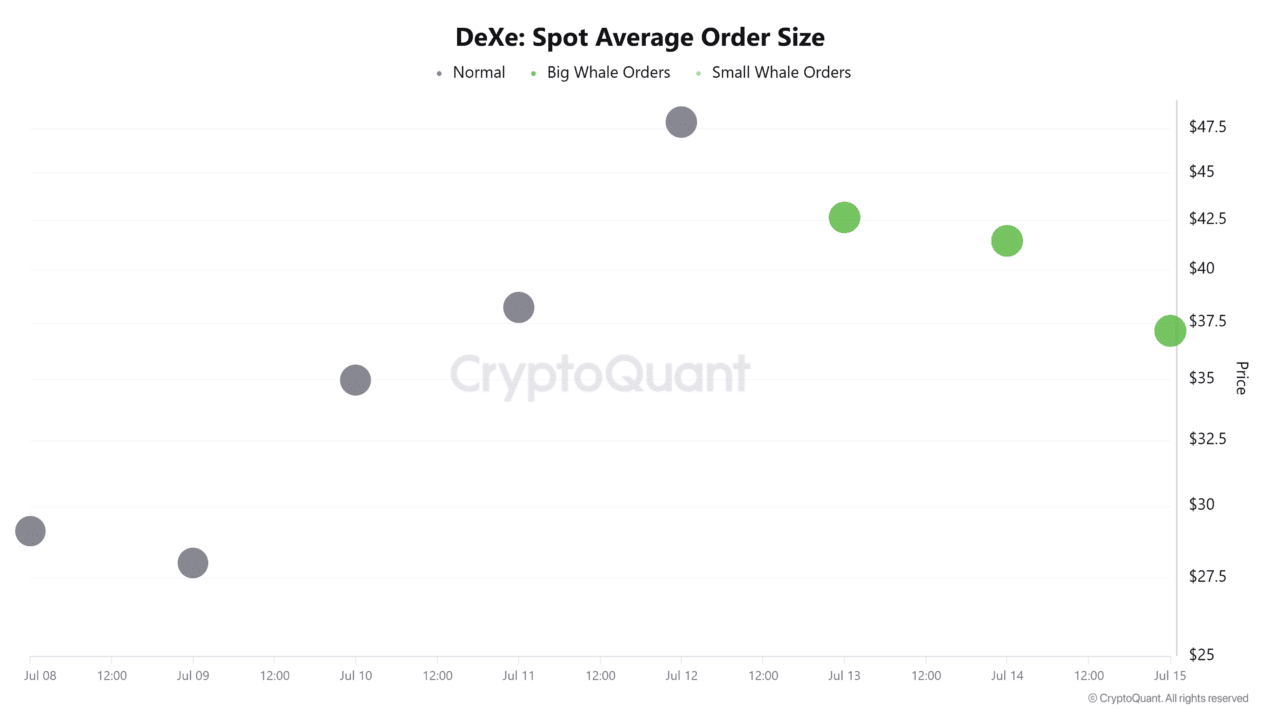
When this metric shows whale orders, it suggests increased market participation from the cohort either selling or buying. Notably, the Spot Taker CVD highlighted that these whales have been actively cashing out.
The Spot Taker CVD metric has remained red for five consecutive days, indicating that more sell orders have recently been executed on the spot.
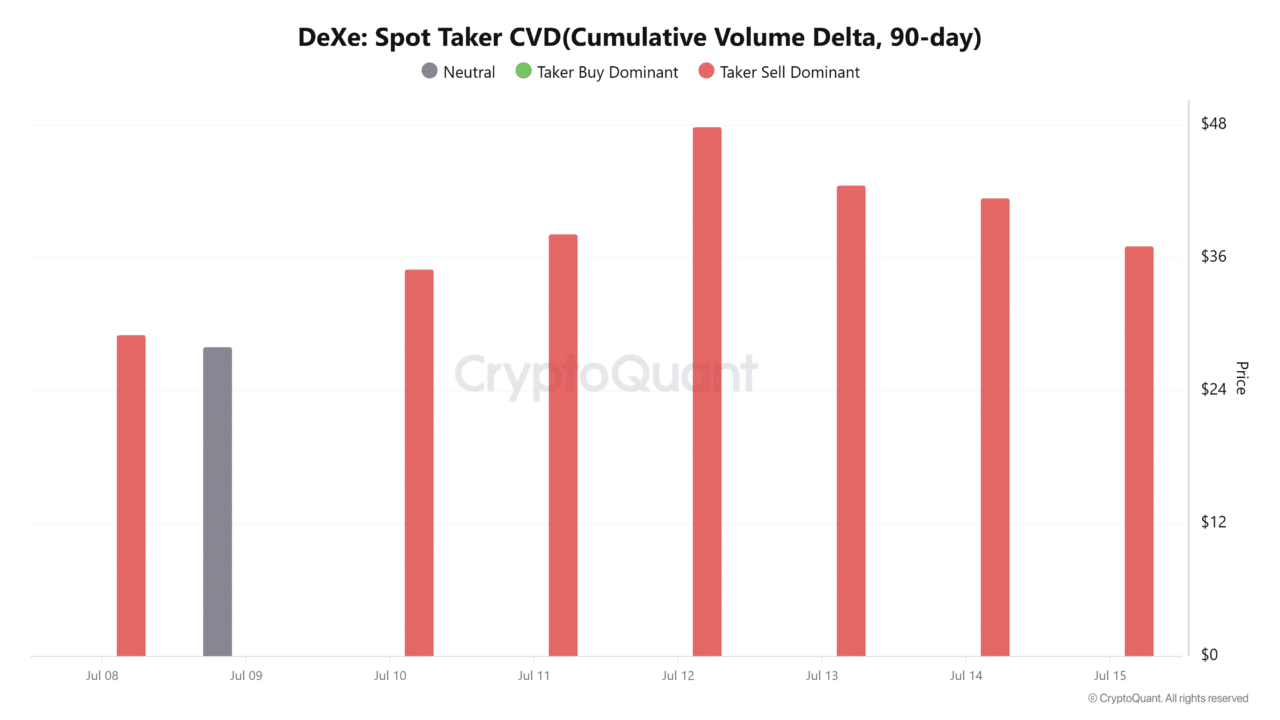
Therefore, it’s most likely that these whales have mostly been closing their positions. Furthermore, the exchange flow also echoed this selling trend. According to CoinGlass data, $DEXE’s netflow has remained positive over the past week.
For example, over the last three days, $33.1 million in $DEXE has entered exchanges, while $26.27 million has left.
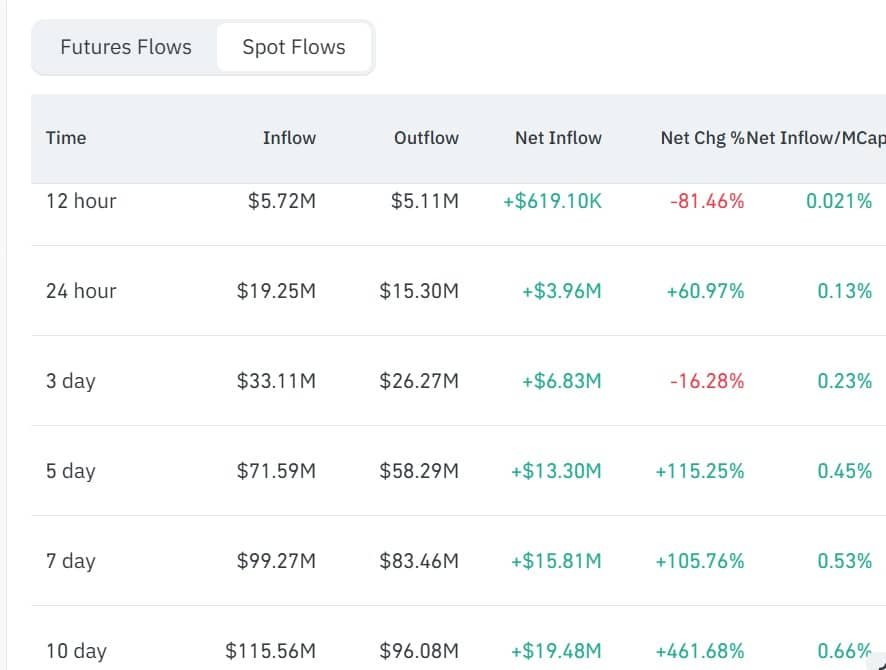
As a result, the Spot Netflow climbed to $6.8 million, a trend that has continued as of this writing. A sustained period of positive net flow suggests that sellers are more incentivized to exit the market.
Often, such market conditions have preceded extended market weakness, leading to more losses on price charts.
Is $DEXE at risk of more losses?
$DEXE is currently experiencing strong downward pressure, largely driven by whale bearishness. As a result, downside market momentum strengthened significantly.
At press time, the Stochastic Momentum Index (SMI) crashed into oversold territory, falling from 77 to 27. At such low levels, the SMI indicated the downside momentum is especially strong.
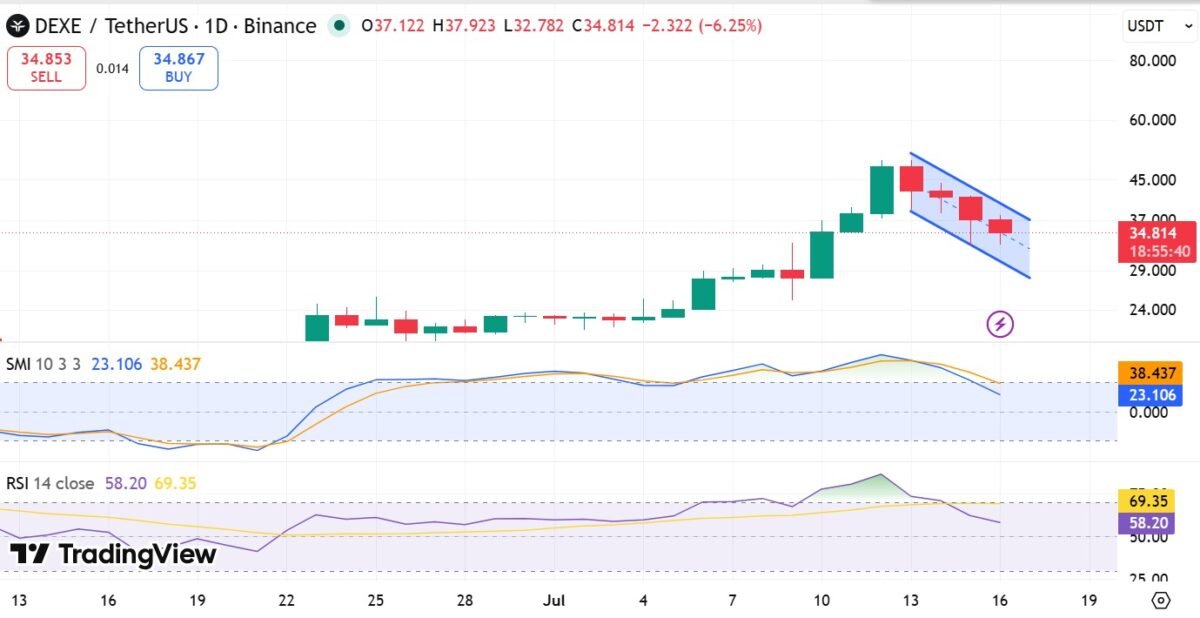
At the same time, the Relative Strength Index (RSI) formed a bearish crossover, falling from 70 to 58 at press time. This showed that although buyers remain active, sellers managed to retake the market.
Typically, such market conditions have preceded a price drop. Thus, if investors, especially whales, continue to offload, $DEXE could drop below $30. However, if the market manages to hold between $37 and $40, this bearish outlook will be invalidated.
Final Summary
- DeXe extended its bearish structure, dropping 9.85% to a low of $32 before slightly rebounding.
- The $DEXE market showed weakness, largely driven by bearish whales who have been aggressively selling.