Privacy Coins Add Billions in 5 Months
On April 9, 2026, archived Coingecko data valued the privacy coin sector at $11.97 billion. As of Thursday, the sector is worth $36.51 billion after adding roughly $24.54 billion, representing growth of about 205% over the past five months. Zcash ($ZEC) and monero ($XMR) led the advance, with the two coins accounting for the vast majority of the sector’s $24.54 billion increase.
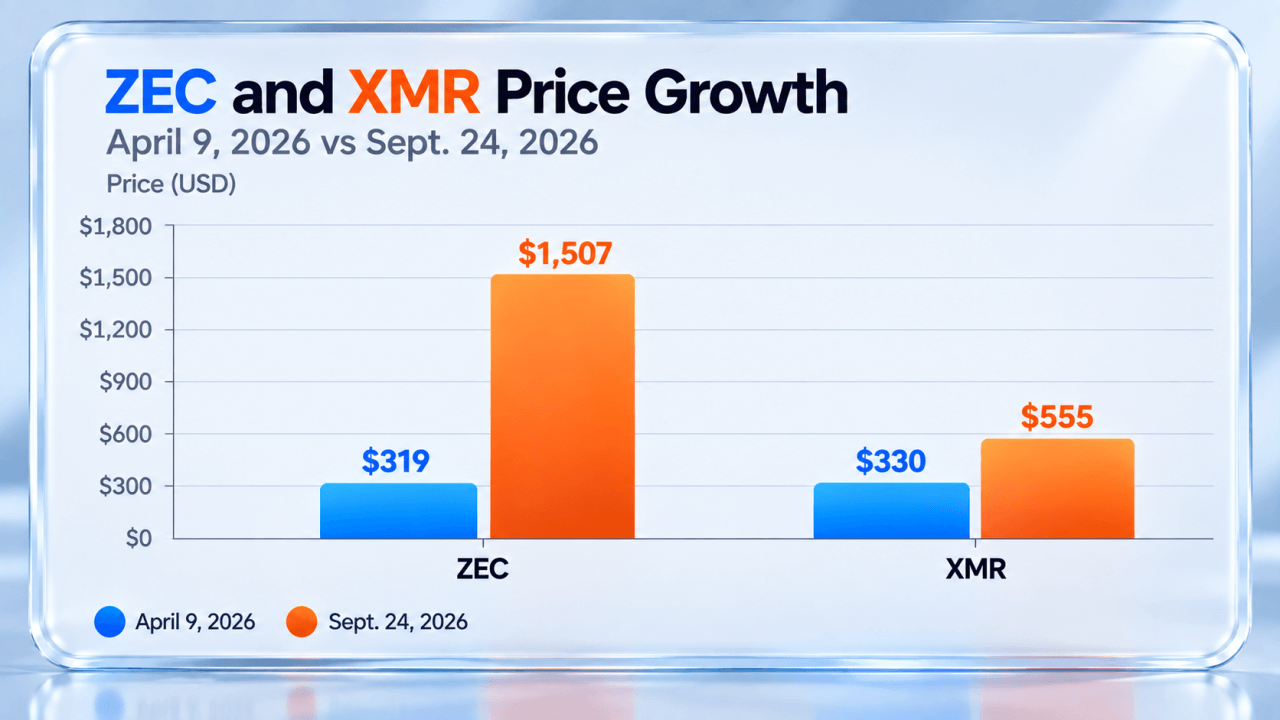
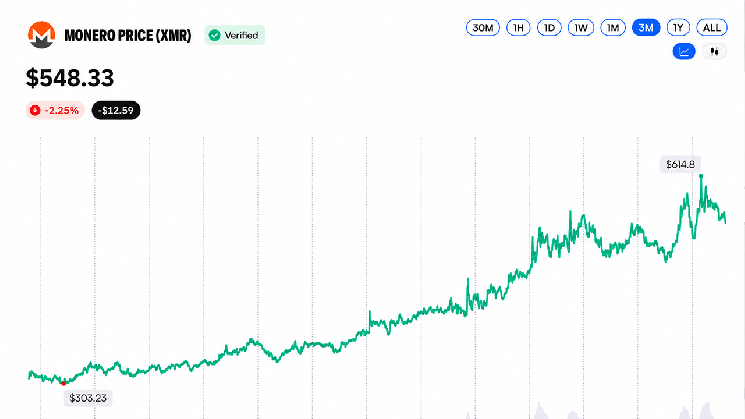
Over the last five months, $ZEC’s market cap swelled by a whopping $20.27 billion while $XMR’s total valuation jumped by $4.33 billion. $ZEC traded at $319 that day and now changes hands at $1,507, while $XMR has climbed from $330 to $555. Other privacy coins have posted more modest gains, but nothing that approaches the dramatic moves recorded by $XMR and $ZEC.
Blockchain Surveillance Puts Financial Privacy Back in Focus
One reason privacy coins have seen demand is because of increased blockchain surveillance. Governments and companies bound by compliance requirements intensified blockchain surveillance in 2026 after criminals and sanctioned countries—including North Korea, Iran and Russia—allegedly moved more than $154 billion in illicit crypto transfers in 2025.
Because Bitcoin, Ethereum, and most other major blockchains are open and auditable, privacy coins like $XMR and $ZEC have become increasingly attractive, not only to criminals but also to people who place a premium on financial privacy and individual freedom.
For many advocates, financial privacy is inseparable from liberty—because when others can scrutinize every transaction, they also acquire the power to track, restrict or punish how people choose to live. The design of the Zcash and Monero networks, among others, makes it much more difficult to trace the movements of coins, giving some investors added peace of mind.
Wall Street and Regulators Give Zcash a Powerful Catalyst
$ZEC’s gains in 2026, in particular, may have drawn some fuel from privacy advocates, but a substantial share also came from Wall Street and regulators. This is perhaps the most obvious catalyst behind the move. For instance, in January, the U.S. Securities and Exchange Commission (SEC) closed its Zcash investigation. The agency did so without recommending enforcement action against the Zcash Foundation.
That outcome cleared a path to the exchange-traded fund (ETF) market, and Grayscale converted its nine-year-old Zcash Trust into the ZCSH spot ETF. It was listed on NYSE Arca on Aug. 25, 2026, creating the first U.S.-listed spot ETF for a privacy coin. SEC filings show substantial capital flowing through that channel, with DCG acquiring roughly $100 million worth of ETF shares in exchange for $ZEC on Sept. 8, 2026.
Cypherpunks won’t like the sound of the second reason, but it is the reality. The next chapter could bring a kind of regulatory contagion. If one privacy coin ETF succeeds, then competitors could push funds for privacy tokens like $XMR or similar products, potentially forcing the SEC to wrestle with increasingly difficult and possibly inconsistent rulings. At the same time, institutional participation could eventually create pressure for viewing keys or compliance backdoors, opening a philosophical fault line within the privacy coin community. Only time will tell.