
The UAE’s Federal Tax Authority (FTA) has introduced a new framework for businesses that deal with digital currencies and VAT. For a long time, businesses conducting a taxable transaction involving cryptocurrency would simply report the crypto amount in their VAT return.
However, now with the new tax framework, businesses are required to convert the value of that digital currency into UAE dirhams (AED). The main purpose of this is to ensure that the transaction can properly be disclosed for VAT purposes.
Issued by the FTA, there is a three-step conversion mechanism to determine the dirham value contained in the Directive on Tax Transactions No. 3 of 2026.
The three main rules under the new framework
First, businesses must select three FTA-approved centralized crypto exchanges and use the same three platforms consistently throughout the calendar year.
The second step is to average the exchange rates from the three selected platforms using the rate available at the exact time of the transaction or when payment is received.
For example, if Bitcoin [$BTC] is AED 400,000, AED 402,000, and AED 398,000 on the three exchanges, the average rate is AED 400,000. A payment of 0.01 $BTC would therefore be valued at AED 4,000 for VAT reporting.
Then for the third step, once the average rate is calculated, businesses must convert the digital currency value into AED for VAT reporting.
That said, businesses must also keep records of the rates from all three exchanges and evidence of how the average was calculated for compliance and potential FTA checks.
Here, if a digital currency is not available on three approved exchanges, the FTA will issue separate guidance on how businesses should determine its value.
For now, the current approved list includes Binance, Bybit Fintech, Deribit, Bitget, and Payward.
UAE’s crypto adoption surge
The directive comes as crypto adoption in the UAE grows rapidly. Chainalysis reported over $56 billion in crypto value received during 2024–25, up 33% year-on-year, while transactions below $1,000 rose 88.1%.
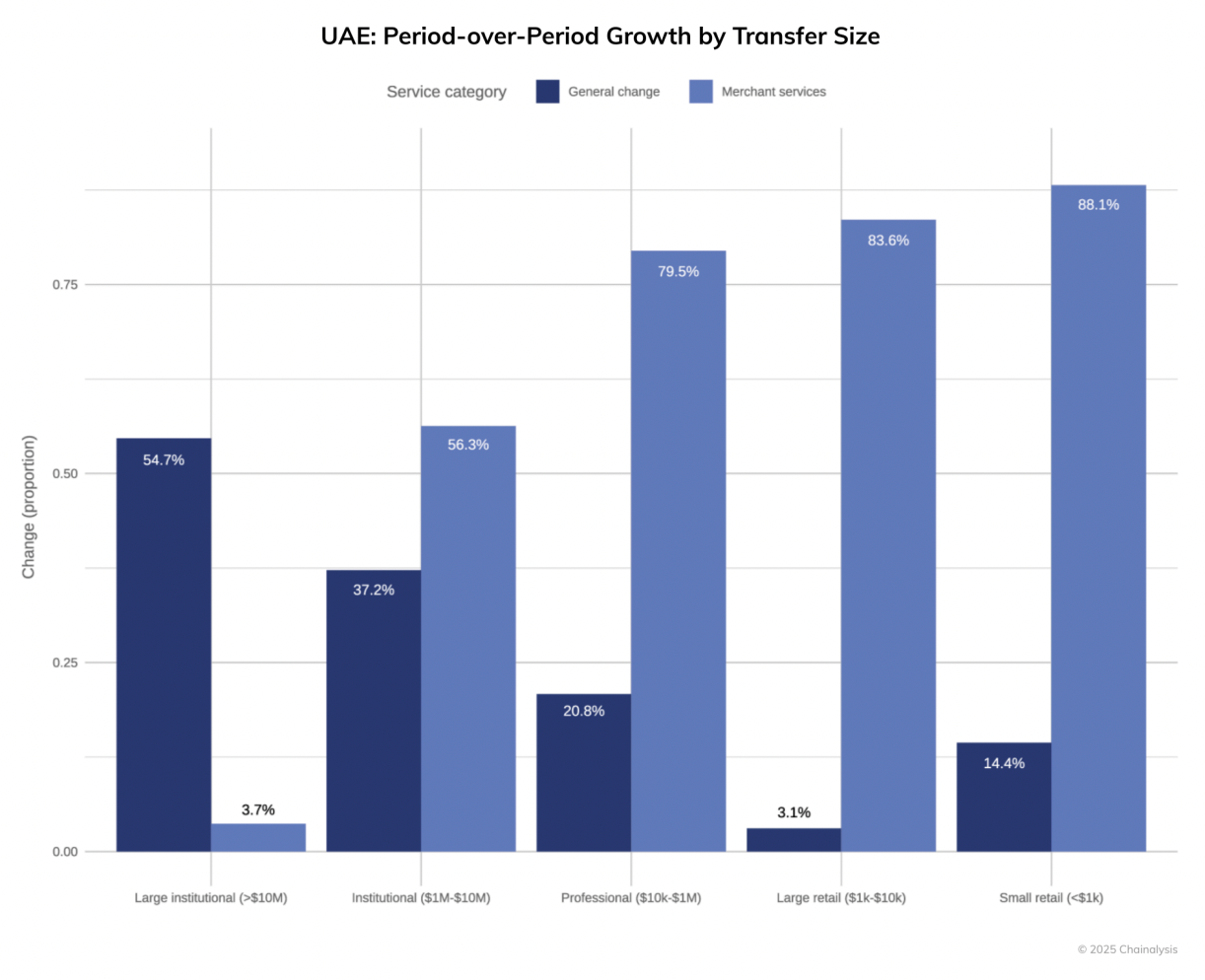
Needless to say, the 5% VAT rate has been in place since 2018, and the 2026 directive is not designed to change the rate.
Instead, the UAE’s 2026 directive fills an eight-year gap by creating a clear, standardized method for handling crypto transactions under VAT.
Other countries and their crypto stance
This coincided with the India’s RBI reiterating its opposition to cryptocurrencies, because much of the crypto ecosystem operates outside India’s regulated banking system.
Meanwhile, South Africa’s central bank and National Treasury have proposed a crypto assets manual to close regulatory gaps around cross-border crypto transactions.
Lastly, even the U.S. House Ways and Means Committee is set to review seven crypto tax proposals.
Final Summary
- The UAE’s FTA has issued a three-step conversion mechanism to determine the dirham value.
- The approved list includes Binance, Bybit Fintech, Deribit, Bitget, and Payward.