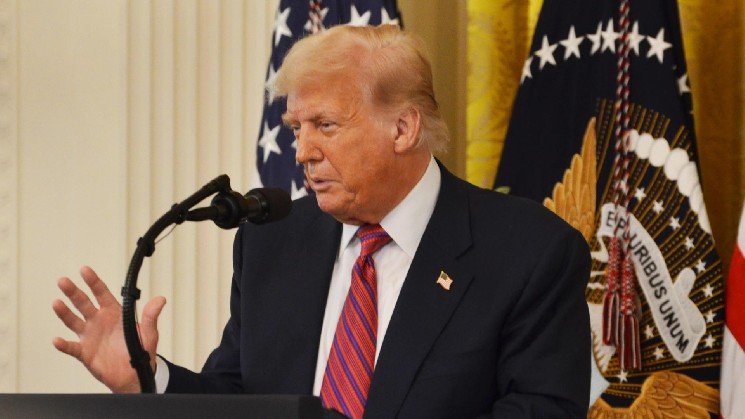
President Donald Trump agreed to most of a stricter ethics package tied to the Clarity Act, AP reported Monday, citing three senior Republicans. The news comes ahead of a Senate cloture vote on the bill on Tuesday.
Several Democrats and Republican Senator Thom Tillis of North Carolina had refused to back the bill, demanding stricter conflict-of-interest rules regarding Trump’s personal crypto asset holdings before agreeing to cede the votes needed to approve the bill.
Trump agreed to "about 80%” of their proposal, a Republican aide told the AP.
Read more: Crypto's Clarity Act is a Schrödinger's cat in life-death limbo as U.S. Senate returns
Under the agreement, state attorneys general will be able to enforce the law alongside the Justice Department and can sue crypto exchanges that list digital assets barred under the bill.
Elected officials, their spouses and federal judges will be required to either divest or place in a blind trust any significant financial interest in a crypto-issuing entity.
The original bill only barred federally elected officials and their spouses from issuing digital assets. Critics said that fell short of addressing Trump's personal crypto wealth.
"After more than a year's worth of negotiations, it's time to pass this bipartisan bill," White House crypto adviser Patrick Witt said on X Sunday night.
Donald TrumpClarity ActRegulation