A new round of debate is gaining momentum on X over why investors should hold base-layer network tokens at all. In the crypto community, the view has taken hold that only Bitcoin has established itself as a valuable asset, while all other tokens are just attempts to build technology platforms that cannot retain value and do not provide compound returns.
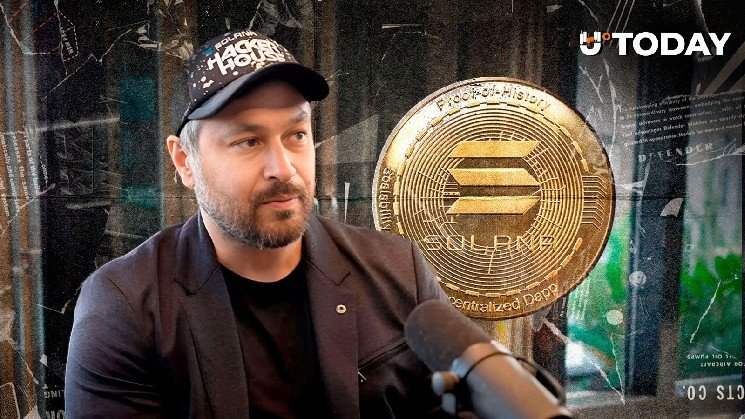
Solana founder Anatoly Yakovenko tried to put an end to the latest discussion in a new post, explaining why this myth is wrong and why there are "true tokens" on the market with a fundamentally different form of ownership.
Why holding 'true tokens' isn't useless: Solana's Yakovenko explains
According to Yakovenko's logic, traditional stocks provide only legal rights, which any government can freeze with a single click. In contrast, the head of Solana points to infrastructure tokens, which provide not paper promises of profit but real mathematical power.
For him, network rights in a blockchain are legally unenforceable, because no one in the world is obligated to run someone else's software, but they also cannot be taken away if anyone who wants to can run that software.
True tokens exist, as apposed to bad equity or debt. Network rights are unenforceable because no one has the obligation to run your software. But also cannot be taken away when anyone can run it. You have no rights, but you have all the power to enforce your own guarantees.…
— toly 🇺🇸 (@toly) July 7, 2026
In Yakovenko's view, the holder of such a token enforces their own economic guarantees without relying on courts. The blockchain developer describes the blockchain itself as a "Schelling point" — a neutral digital space where millions of people coordinate capital simply because the rules of the game are the same for everyone and cannot be forged.
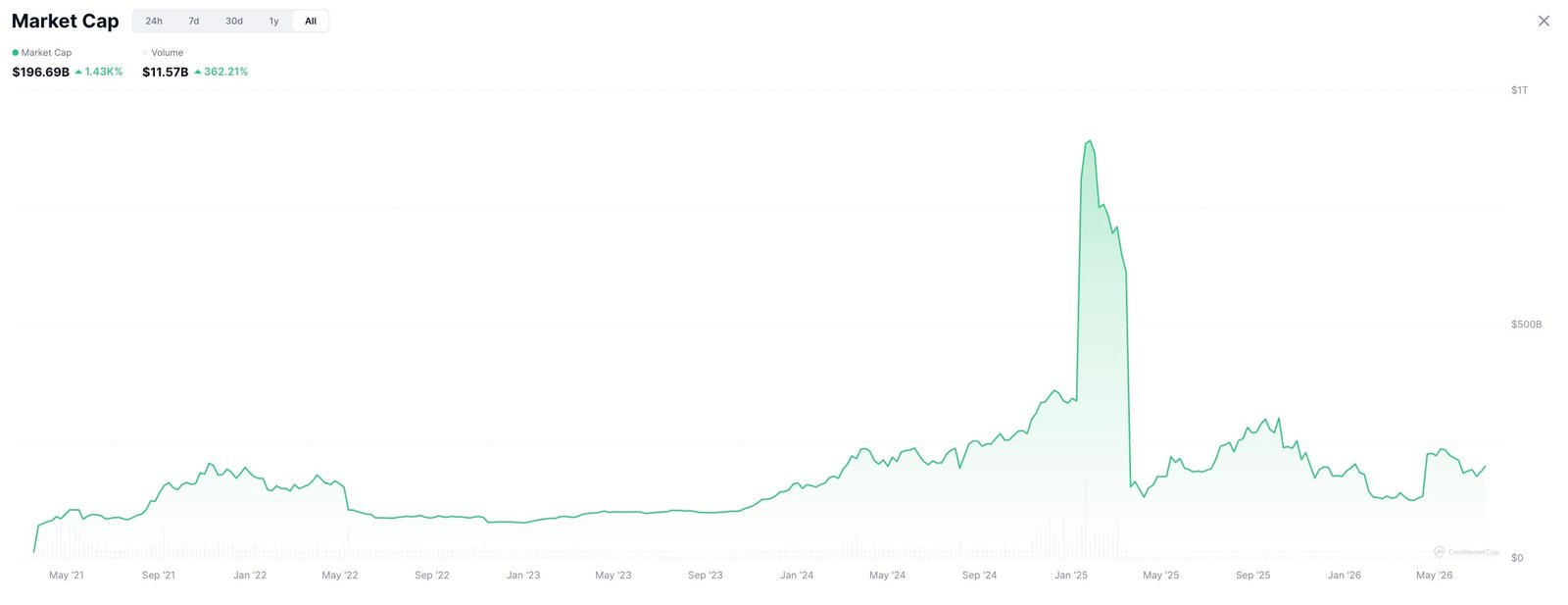
The market reality shown by current CoinMarketCap statistics clearly highlights this debate. On the one hand, the total capitalization of assets based on Solana stands at $195.71 billion, meaning that large capital clearly believes in the reliability of this coordination environment.
On the other hand, the network's native token, SOL, is trading at around $81.67 — a price level that lags behind record operational activity, which is exactly what fuels the arguments of skeptics.
This gap between infrastructure utility and asset value is forcing developers to move from discussion to code. To prove the ability of technology platforms to accumulate capital, Solana is currently changing its tokenomics.
Through new technical proposals, including SIMD-547 on burning base fees, the network is introducing mechanisms for stronger value retention. The goal is to support the mathematical freedom of tokens described by Yakovenko with economic logic that investors can understand, proving through action that value can belong not only to Bitcoin.