
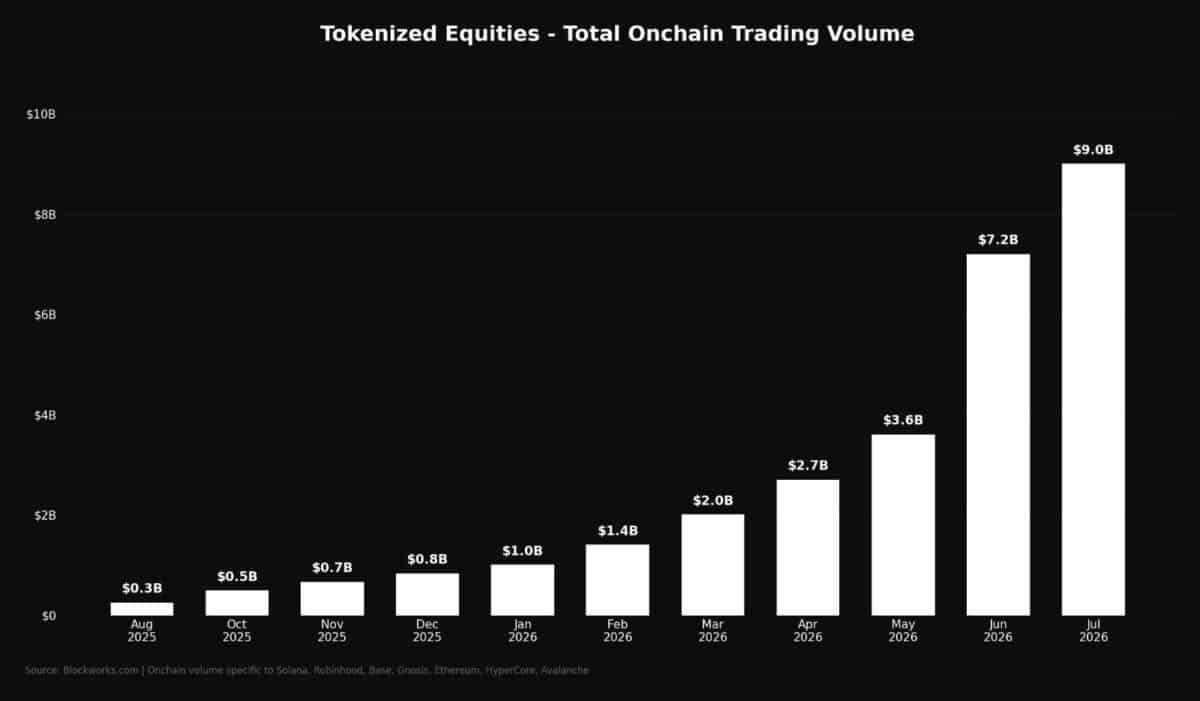
Tokenized equities are gaining traction as investors increasingly trade stocks outside the limits of traditional market hours. Against this backdrop, trading volume increased from $1 billion in January to $3.6 billion in May before later reaching $9 billion in July.
This acceleration correlates with the growing number of trades occurring outside of traditional market hours. Off-hours account for 55% of Jupiter’s total volume of trades using its tokenized equity product.
This trend may help explain why so many investors prefer to use on-chain markets to maintain their stock holdings after the close of a traditional exchange.
Jupiter’s routed volume also rose 95% quarter-over-quarter. This surge indicates that activity is spreading through supporting trading infrastructure. Meanwhile, 207% quarterly growth indicates tokenization is becoming a meaningful alternative trading channel.
Meanwhile, the volume of equity trading via tokens grew 207% over QOQ, indicating that trading equities using tokens is becoming a viable alternative trading option.
Nasdaq extends trading to 23 hours
Nasdaq’s planned 23-hour sessions further reflect this demand shift. This development brings traditional markets closer to the extended access tokenized equities already provided. Nasdaq plans nearly 23-hour trading across five weekdays, adding a 9 p.m. to 4 a.m. ET session.
The schedule would run from Sunday evening through Friday, with a daily one-hour processing break. This structure gives overseas investors more opportunities to trade U.S. equities during their local hours.
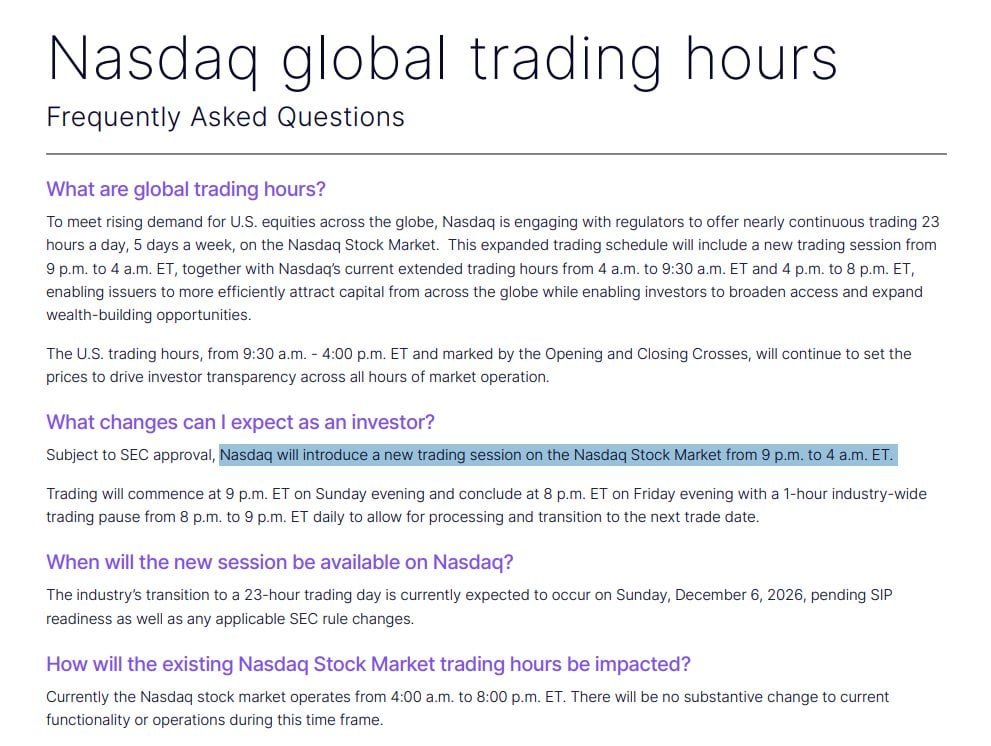
It also shows how demand for longer access is influencing established exchanges rather than remaining limited to on-chain markets. However, regular U.S. hours will still set official opening and closing prices.
The transition is expected to roll out on the 6th of December, subject to regulatory approval.
Tokenized U.S. equities expand overseas
That access gap is becoming harder to ignore as more U.S. equities reach overseas investors through crypto-native platforms.
Kraken has now opened U.S. stock trading to eligible European Economic Area (EEA) customers. This will provide its customers with more than 7,000 stocks plus more than 700 tokenized equities.
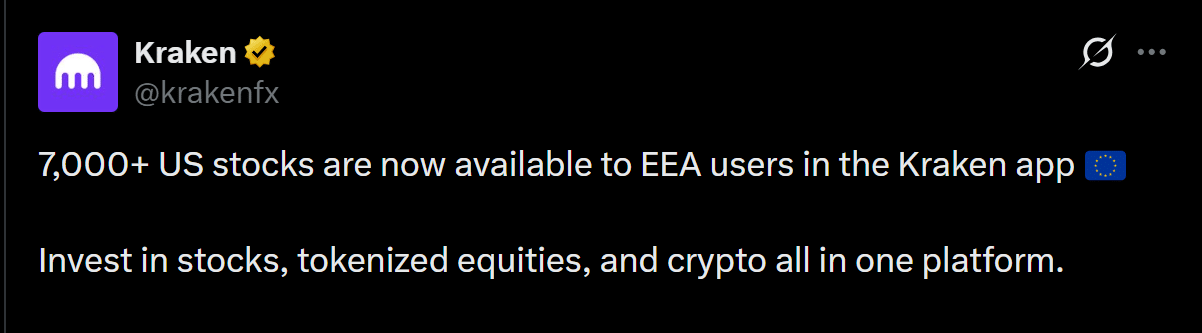
Customers can also access over 600 crypto assets through the same regulated account, bringing traditional and tokenized markets closer together.
In comparison to this, Robin Hood currently provides its users with more than 190 stock tokens to purchase across more than 120 countries worldwide. However, it still excludes its U.S. customer base
This contrast strengthens Vlad Tenev’s argument that Americans risk missing innovation built around their own assets. On a post on X, he stated, “America must continue to lead.”
As foreign market participation increases, the narrative surrounding the U.S. is evolving from whether tokenized equities are effective to who can utilize them.
Final Summary
- Tokenized equities hit $9 billion as off-hours demand grows.
- Nasdaq, Kraken, and Robinhood are expanding access to U.S. equities.