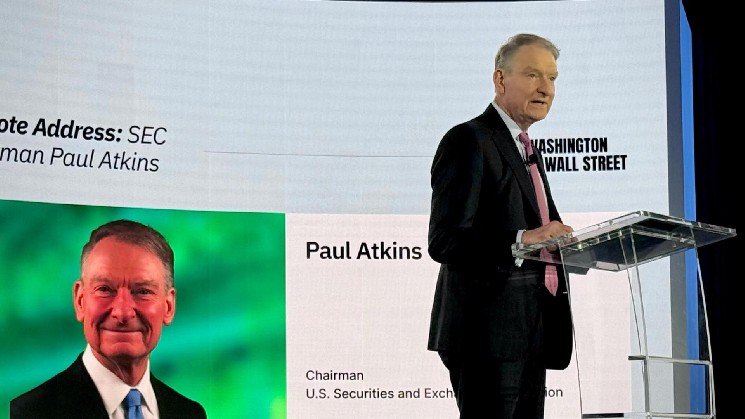
Blockchain-based trading venues that want to list and trade tokenized securities received fresh permission and an explanation of how to do that from the U.S. Securities and Exchange Commission on Thursday.
The SEC unveiled its long-awaited tokenization exemption on Thursday morning, formally granting these so-called "tokenized securities venues" (TSVs) the ability to provide automated market makers and liquidity pools that, in turn, can be used to trade tokenized securities. These companies will have a five-year "conditional exemption" from having to meet the definition of an "exchange" in U.S. securities law, according to the SEC.
Under the SEC's watch, the venues will manage pools of necessary assets and use algorithm-driven automation to manage the activity of buyers and sellers. Thursday's order sets paths for tokenization by either the stock issuer or a third party, under certain conditions.
“The Securities and Exchange Commission is taking a significant step forward, within its statutory authority, to bring America’s capital markets into the digital age by facilitating onchain trading of certain tokenized stocks through the ‘Innovation Exemption,’” SEC Chairman Paul Atkins said in a statement.
The regulator explicitly excluded synthetic security tokens that are derivatives and don't provide ownership of the shares. The SEC only allows tokens that represent real ownership of the underlying stock, which Atkins said “must provide holders with the same rights and privileges as the traditional securities, including rights to receive dividends and exercise voting rights.”
That may exclude derivatives and debt instruments offered in many of the offshore products, such as from Robinhood.
The time-limited innovation exemption doesn't require the SEC to formally designate the venues. Instead, any platform that believes it can meet the SEC's definition and comply with the conditions only needs to provide notice before opening the doors of a tokenization operation, according to the agency.
5 years, to start
Atkins acknowledged the temporary nature of the policy, which he said lets firms operate “in a permissioned environment today while the commission considers the need for additional action to facilitate onchain trading.” He said the measure “must be followed by durable rulemaking to ensure that onchain markets remain a viable pathway as our capital markets continue to evolve.”
Tokenization has become one of Wall Street's biggest blockchain experiments, giving major weight to the SEC's opening move. The basic idea is to take familiar assets such as stocks, bonds or investment funds and represent ownership of them on a blockchain, potentially allowing them to move more easily between investors and financial platforms.