
Pi Network [PI] launched a liquidity pool containing SLICE and Test-Pi, using an automated market maker to calculate swaps based on the amount of both tokens in the pool.
After introducing the model, the PI team distributed 10 million SLICE test tokens. The token distribution provided pioneers with firsthand experience with the liquidity pools and token swaps before the mainnet.
How the SLICE liquidity pool works
According to the core team, the launchpad sends Pi proceeds into the token liquidity pool. The model pairs the ecosystem token with the project tokens. For the SLICE test launch, the pool contains SLICE and Test-Pi.
Therefore, the SLICE liquidity pool functions as a decentralized mechanism to facilitate token swaps and establish market pricing. The SLICE test launch uses an automated market maker alongside the Pi DEX order book.
Swaps are priced based on the balances held in the liquidity pool. Prices increase when pioneers use Test-Pi to buy SLICE and decrease when pioneers swap SLICE for Test-Pi.
How did the PI market react?
After a successful completion of the second launchpad test, PI reacted positively. In fact, the altcoin reclaimed the $0.08 resistance after rising by 5.8% on the daily charts.
Despite these gains, the altcoin’s market momentum remains weak. In fact, the crypto’s ADX SMA indicator continued to decline.
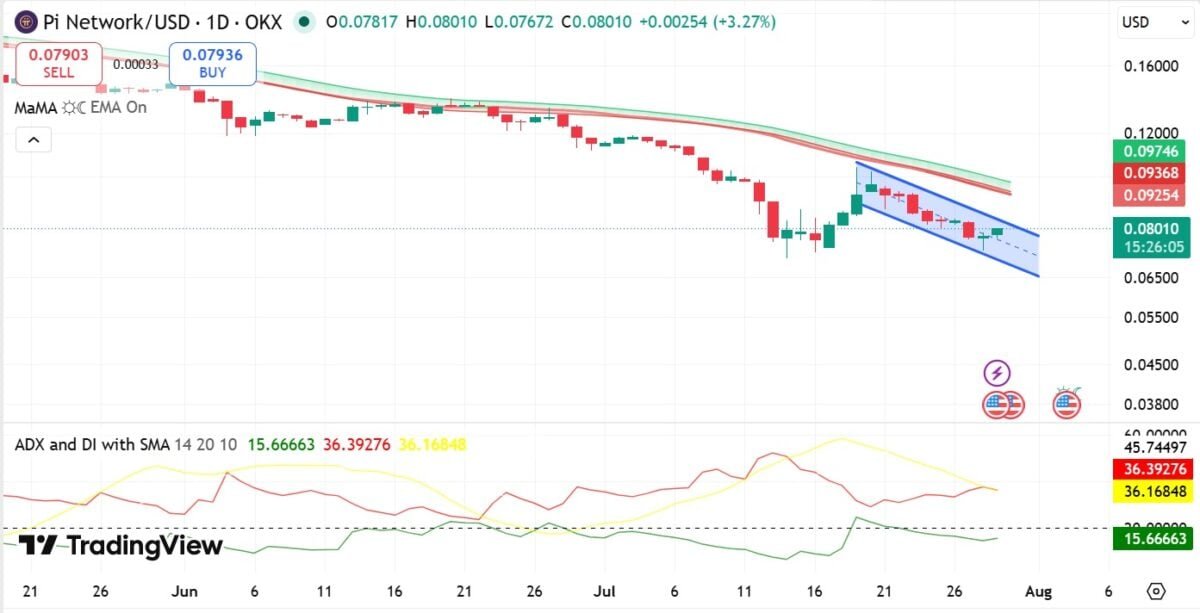
At press time, the +DI sat around, while the negative index and the ADX both remained elevated at 36. Such a setup suggests the downside momentum is strong and most likely to continue. The Momentum Adjusted Moving Average (MaMa) confirms this downward pressure, as it hovered above the price.
Therefore, the recent gains were sparked with the launchpad launch, and once this fades, another dip will fall. Thus, the trend is likely to continue and fall below $0.08, with $0.076 as the next support level.
Why does PI remain weak?
Despite the recent market activity, PI’s demand remains weak as whales have remained bearish and aggressively selling.
A look at the Spot Average Order Size data from CryptoQuant showed whale activity has remained elevated over the past week.
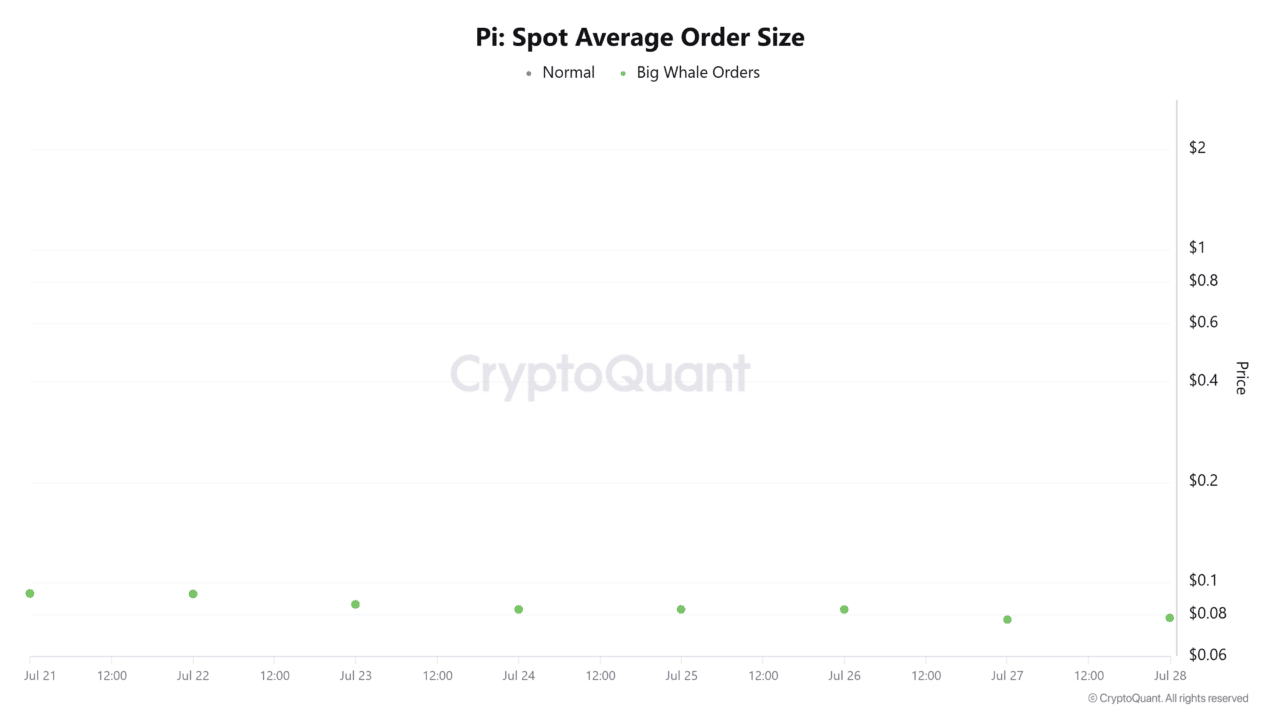
The metric revealed large whale orders, indicating either heightened buying or selling activity. Throughout this period, the Spot Taker CVD stayed red, underscoring sellers’ dominance.
Thus, sellers are extremely active on the spot, suggesting whales have been mostly selling.
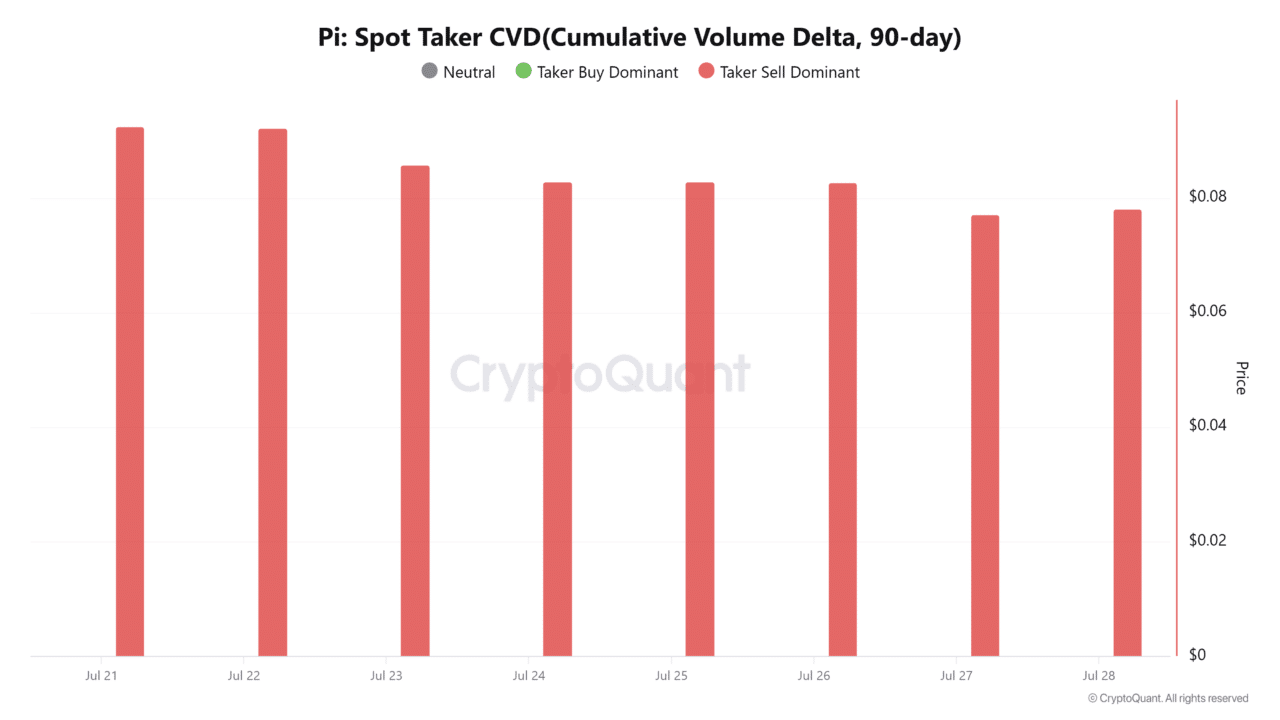
With whales selling at even the slightest of gains, PI is unlikely to make a significant recovery in the short term.
Final Summary
- PI Network announced the launch of the SLICE Test-Pi liquidity pool on the testnet.
- PI climbed 5.8% to reclaim $0.08 following increased market activity, but whales continue to sell, weakening the market.