
Pi Network price fell beneath the psychological $0.10 mark for the first time on July 9, extending its month-long slide to more than 25% as growing token supply and persistent selling overwhelmed demand.
According to data from crypto.news, Pi Network (PI) traded near $0.098 during the session, leaving the token down more than 25% over the past month and extending a prolonged downtrend that has erased most of its post-mainnet gains.
The latest decline comes as Pi Network continues to face heavy supply-side pressure from scheduled mainnet migrations and token unlocks. Millions of newly unlocked PI tokens have entered circulation in recent weeks, increasing the amount of tradable supply at a time when buying demand has remained subdued.
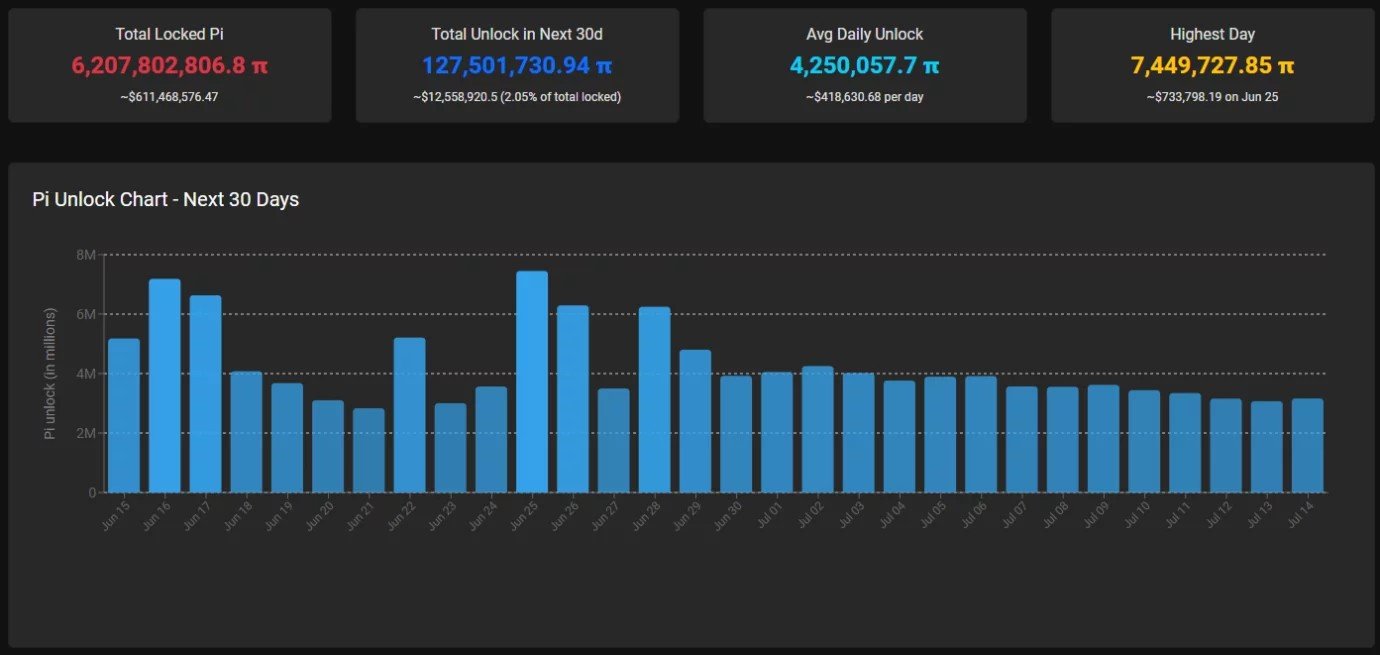
The imbalance has created a persistent supply overhang, allowing sellers to dominate trading and pushing the token to successive record lows.
The bearish mood has also spread to derivatives markets. Recent market data showed Pi’s open interest falling from above $10.88 million to around $9.75 million as leveraged long positions were flushed out during the selloff.
At the same time, funding rates dropped to roughly -2.15%, signaling that short sellers are paying a premium to maintain bearish bets, a sign that market participants continue to expect further downside.
Why is the Pi Network price falling?
Beyond project-specific pressures, the broader macro backdrop has also turned unfavorable for speculative cryptocurrencies. Rising geopolitical tensions in the Middle East triggered a broader risk-off move across financial markets, dragging Bitcoin below $62,000 and prompting investors to reduce exposure to smaller altcoins.
Pi Network has been particularly vulnerable because its enclosed mainnet structure limits liquidity, making price swings more severe when capital leaves the market.
Investor attention has also shifted toward artificial intelligence-related investments and blockchain ecosystems with stronger utility. Although the Pi Core Team recently introduced backend storage improvements for App Studio, the update failed to generate meaningful buying interest.
The continued wait for an Open Mainnet launch, combined with the absence of major tier-one exchange listings, has weakened confidence and left ongoing token emissions without sufficient demand to absorb them.
What do the charts say about Pi’s outlook?
The daily chart shows Pi Network trading inside a well-defined descending channel that has guided price action lower since early May. The latest breakdown below the psychological $0.10 level confirms that sellers remain firmly in control, while the token continues to print lower highs and lower lows without any sign of trend reversal.
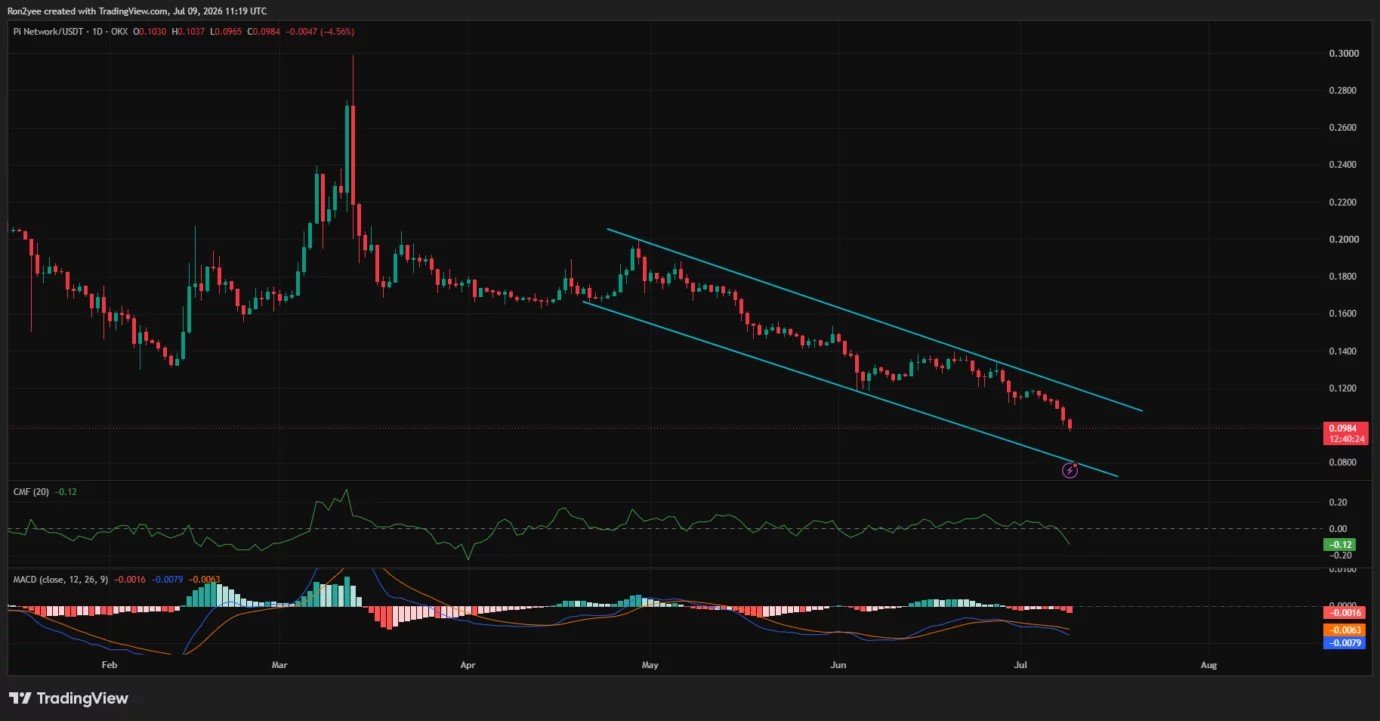
Momentum indicators also reinforce the bearish structure. The Chaikin Money Flow has slipped to around -0.12, indicating sustained capital outflows, while the MACD remains below the zero line with a bearish crossover and expanding negative histogram bars. Together, these signals suggest that downside momentum is still strengthening rather than fading.
As long as PI remains below the upper boundary of the descending channel, bears are likely to retain control. A decisive recovery above $0.10 would be the first sign of stabilization, but failure to reclaim that level could expose the next major downside area around the channel support near $0.08, extending the token’s record-setting decline.