
Crypto’s next push into traditional finance may not come from another stablecoin or tokenized stock. According to Grayscale, onchain vaults could be the industry’s next major breakthrough, bringing blockchain-based asset management closer to the mainstream financial system.
The firm’s latest research argues that while stablecoins, tokenized assets, and perpetual futures have already started crossing into traditional markets, onchain vaults may be next in line as institutional credit markets mature.
Vaults Mirror Traditional CLO Structure
Grayscale compares onchain vaults to collateralized loan obligations (CLOs), one of the largest credit products in traditional finance.
Like CLOs, vaults pool investor capital into professionally managed portfolios designed to maximize risk-adjusted returns while distributing cash flows generated by underlying assets. The major distinction, however, is that vaults operate entirely on blockchain networks using smart contracts instead of trustees and custodians.
Because transactions settle natively on networks such as Ethereum, Base, and Solana, Loading profile preview believes vaults can provide greater transparency, operational efficiency, and potentially improved liquidity.
Grayscale Research believes onchain vaults may break into traditional finance.
— Grayscale (@Grayscale) July 29, 2026
Similar to collateralized loan obligations (CLOs), vaults pool capital into managed portfolios, but are fully onchain. Today, onchain vaults hold ~$7B in total value locked (TVL), a fraction of the… pic.twitter.com/risg1kdeZ6
Still Tiny Beside Traditional Finance
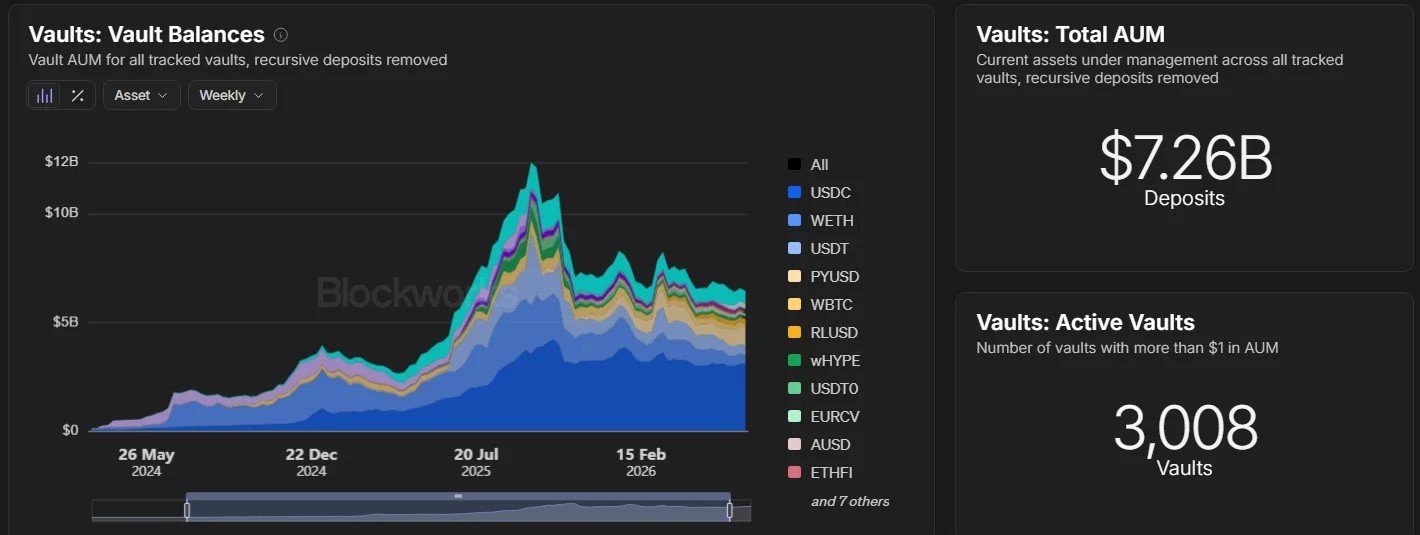
Despite growing attention, the sector remains relatively small. According to Grayscale, around 3,008 vaults managed by 57 curators collectively hold approximately $7.26 billion in total value locked (TVL) as of late July 2026.
Roughly 79% of these vaults focus on stablecoins. That figure remains well below the roughly $12.30 billion invested in September 2025.
By comparison, the traditional CLO market exceeds $1.5 trillion, spread across thousands of investment vehicles managed by more than 250 firms.
Curators Take Center Stage
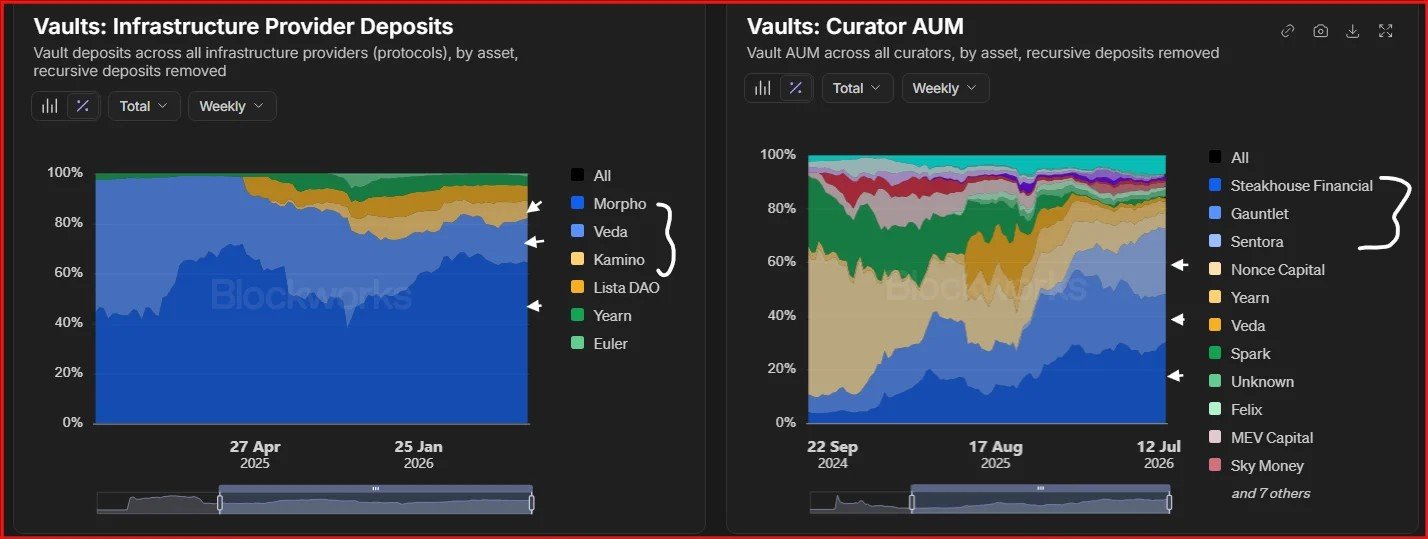
As the market evolves, curator competition is becoming increasingly important. According to Blockworks onchain data, Steakhouse Financial, Gauntlet, and Sentora currently rank among the leading vault curators.
Infrastructure providers also continue expanding, with Morpho, Veda, and Kamino holding the largest deposit bases.
Grayscale notes that regulatory uncertainty remains one of the biggest hurdles, particularly around U.S. securities rules when investors depend on curators for active portfolio management.
Still, the firm argues that onchain vaults are steadily emerging as a foundational investment vehicle for digital asset credit markets, much like CLOs have become in traditional finance.
Loading article prices