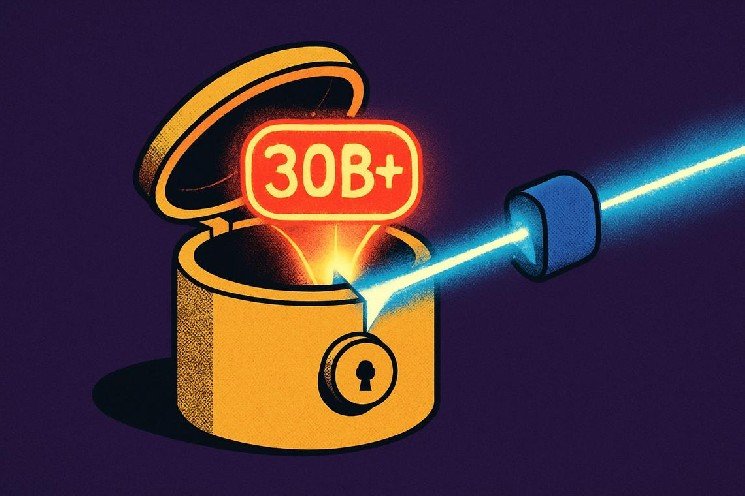
Nvidia is in talks to make one of its boldest artificial intelligence bets yet, negotiating an investment in Perplexity that would value the AI search startup at more than $30 billion, according to reporting from The Information and confirmed by Reuters. If finalized, the Nvidia investment in Perplexity would mark a sharp jump from where the company stood just a year ago, and it would deepen a relationship between the two companies that dates back further than most people realize.
Key takeaways
- Nvidia is negotiating an investment in Perplexity at a valuation above $30 billion, more than 50 percent higher than last year’s funding round.
- Perplexity’s annualized revenue has tripled from $250 million to over $750 million, helped by its “Perplexity Computer” AI agent.
- Nvidia previously considered an acqui-hire of Perplexity’s technology and staff before shifting toward an investment deal.
- Perplexity joined Nvidia’s Nemotron Coalition in March to back open AI models as a counterweight to Chinese development efforts.
- CEO Aravind Srinivas is reportedly weighing an IPO around 2028, after the company has raised more than $1.7 billion to date.
Nvidia’s Talks to Back Perplexity at a $30 Billion-Plus Valuation
The core of the story is straightforward but significant: Nvidia is negotiating an investment in Perplexity at a price tag north of $30 billion, a figure that would represent more than a 50 percent increase from the company’s last funding round a year ago. That kind of jump, in this market, doesn’t happen without a business story to back it up.
Reuters, citing a report from The Information, corroborated the talks on Monday, adding weight to what had initially circulated as a single-source scoop. The chipmaker’s interest in Perplexity isn’t new, either. Nvidia first put money into the startup back in late 2023, well before generative search became a crowded and increasingly competitive category.
That earlier bet is worth remembering, because Nvidia had also floated a different path at one point: an acqui-hire that would have brought Perplexity’s technology and staff directly under its own roof rather than leaving the company independent. The fact that talks have circled back to an investment, at a far higher valuation, suggests Nvidia sees more value in Perplexity as a standalone company than as an absorbed team.
Why the growth story matters here
Perplexity has not had an easy run competitively. Once known primarily for its AI research capabilities, the company has lost some ground as ChatGPT and Claude rolled out their own research modes, leaning on much larger consumer bases to pull users in. That backdrop makes the revenue numbers behind this funding round even more relevant to understanding why Nvidia is willing to pay up now.
Inside Perplexity’s Revenue Surge
Perplexity’s annualized revenue has tripled, climbing from $250 million to more than $750 million. That’s the kind of growth curve that tends to justify a steep valuation jump, and it appears to be driven less by search traffic and more by a shift in what the product actually does for users.
A meaningful piece of that growth traces back to “Perplexity Computer,” an AI agent built to carry out automated tasks rather than simply answer questions. Agentic tools like this tend to consume far more computing power per interaction than a standard chatbot query, since completing a multi-step task requires many more tokens than returning a single answer. That higher token consumption likely explains a large part of the revenue jump, and it’s also exactly the kind of usage pattern that benefits a chip supplier sitting on the other side of the transaction.
What Perplexity Computer changes
Rather than acting as a search engine that returns links and summaries, Perplexity Computer is designed to execute tasks on a user’s behalf. That distinction matters commercially: automated, multi-step work tends to be billed differently and consumed more intensively than a simple lookup, which helps explain how a company facing tougher competition in plain search still managed to triple its revenue run rate.
A Bigger Bet Amid Nvidia’s AI Investment Spree
Nvidia’s interest in Perplexity fits inside a much larger pattern. In March, Perplexity joined Nvidia’s Nemotron Coalition, an initiative built around promoting open AI models as a counterweight to Chinese development efforts, including rivals like DeepSeek. That alignment gives Nvidia an ecosystem partner it can point to in the broader geopolitical race over open AI models, not just a search app it happens to own a stake in.
The Perplexity talks also sit alongside a string of comparable moves. Nvidia recently struck deals with Poolside, Groq, and Enfabrica. Groq’s round valued the company at $20 billion, and Enfabrica’s came in at $900 million. Poolside’s arrangement went further still, reportedly combining a $6 billion deal to license its AI models with an additional $1 billion investment that valued the startup at $12 billion, alongside job offers extended to more than 100 of its employees. Taken together, these deals paint a picture of a chipmaker spreading capital across the AI landscape at a pace few competitors can match.
That pace hasn’t gone unquestioned. Technology critic Ed Zitron argued that Nvidia is “effectively bailing out anyone in the AI industry as a means of inflating their valuations and keeping them buying compute,” adding that the company is “spending every dollar it takes to stop any prominent AI company from dying, because the perception alone would be lethal to the AI narrative.” It’s a pointed read on a dynamic that’s easy to verify from the deal structures themselves: much of the money Nvidia hands out in these rounds tends to flow back to Nvidia as revenue once portfolio companies turn around and buy its chips.
That circularity is worth sitting with. Every Nvidia investment in Perplexity, Poolside, Groq, or Enfabrica raises a valuation on paper, but it also feeds Nvidia’s own hardware sales pipeline, blurring the line between strategic partnership and self-reinforcing demand generation. Whether that structure proves durable will likely depend on how independently these AI companies can grow revenue once the initial funding cycle plays out.
What’s Next: IPO Talk and Industry Implications
Perplexity has raised more than $1.7 billion to date, and CEO Aravind Srinivas is reportedly considering an IPO around 2028, according to CNBC. A public listing that far out gives the company room to keep scaling its agentic products before facing the scrutiny that comes with being a publicly traded company, but it also means today’s valuation talks will set the baseline investors measure future rounds against.
For Nvidia, locking in a position now, at a valuation already more than 50 percent above last year’s round, means capturing upside early in a company whose usage patterns happen to align neatly with its own chip demand. For Perplexity, the capital and credibility that come with a marquee investor help offset the competitive pressure from bigger, consumer-facing rivals. Neither side is hiding what it stands to gain, and neither outcome is guaranteed until the deal actually closes.
FAQ
What is the valuation of Perplexity in the current Nvidia investment talks?
Nvidia is negotiating an investment in Perplexity at a valuation above $30 billion.
What factors contributed to Perplexity’s revenue growth?
Perplexity’s annualized revenue tripled mainly due to “Perplexity Computer,” an AI agent for automated tasks that drives higher token consumption than standard search queries.
How does Nvidia benefit financially from investing in AI firms like Perplexity?
Investment money often flows back to Nvidia as revenue when portfolio companies purchase Nvidia chips to run the products that money helped fund.
When is Perplexity considering going public with an IPO?
Perplexity’s CEO, Aravind Srinivas, is considering an IPO around 2028, according to CNBC.
Article produced with the assistance of artificial intelligence and reviewed by the editorial team.