Ethereum Foundation developers are looking for a way to save the network from the critical growth of its database and have turned to the architecture of its main competitor. Researcher Toni Wahrstätter proposed introducing elements of the UTXO model into Ethereum, a model that has been successfully used by Cardano for years.
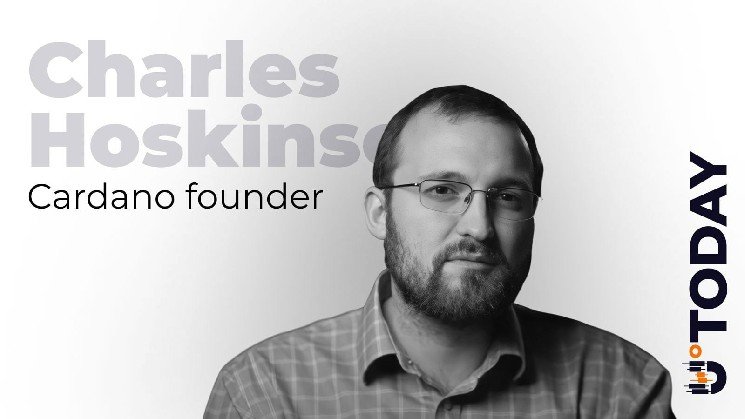
Amid this, Cardano founder Charles Hoskinson — a former Ethereum co-founder who left the project in 2014 after a public split over deep disagreements with Vitalik Buterin about the network's commercial direction — accused his former colleagues of hypocrisy.
Ethereum's problem lies in its account-based model, as the network is forced to permanently store active data on the balance of every wallet, even if the transfer was a one-time transaction. As part of the EIP-8141 standard, Frame Transactions, Wahrstätter proposed making simple payments "one-time use."
Information about them would be verified from the blockchain's history, while only a single spent bit would remain in active memory. According to the author's calculations, this would reduce unnecessary data growth by 99.8% for basic L1 transfers.
The idea has already entered the Strawman discussion track, which Vitalik Buterin himself is following.
Why Cardano's founder is furious
For Hoskinson, whose Cardano blockchain was originally built on a modified Extended UTXO model, or eUTXO, specifically to solve the scaling problem, this news became a trigger. He reacted emotionally to the initiative on X, stating that there is an unspoken taboo inside the Ethereum ecosystem against recognizing his contributions.
The main irony of this dispute is technical. The UTXO model itself belongs to Bitcoin, but its network has no smart contracts — it is simply a wallet system. Cardano, however, took this mechanism as its foundation from the beginning and expanded it into eUTXO in order to run complex applications.
It's not like I've been literally working on this topic for over 10 years of my life and launched a cryptocurrency that was number three on coinmarketcap with millions of users to deploy it. It's literally a crime in the Ethereum inner circles to mention Cardano. EUTXO is the… https://t.co/3F3l6cg0JE
— Charles Hoskinson (@IOHK_Charles) July 7, 2026
Ethereum has always operated on the opposite, account-oriented system. Now that its researchers are proposing to introduce UTXO elements to save memory, this looks like an acknowledgment of someone else's technological solutions.
In practice, however, combining two different models is difficult, as it creates compatibility risks for already functioning DeFi applications.
As a result, Ethereum now faces a choice: continue tolerating the growth of its database or implement a hybrid workaround, effectively confirming the correctness of Hoskinson's approach.