
The $HYPE price has been under pressure since peaking at $76.80 in June, extending its decline toward the 200-day EMA at $50.23. With the token already testing investor confidence, another break below the $54.37 support could accelerate the short-term correction.
Yet, beneath the selling pressure, the fundamental narrative isn’t quite as one-sided as the charts suggest. Recent on-chain activity shows why sentiment has turned cautious.
Whales Continue Adding Selling Pressure
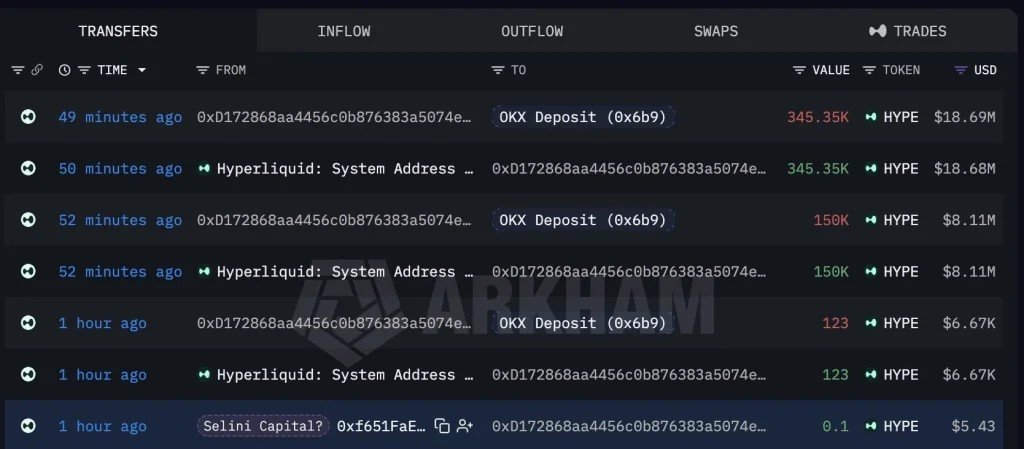
According to Lookonchain, a wallet linked to Selini Capital deposited 495,473 $HYPE, worth approximately $26.8 million, to OKX within an hour. Large exchange inflows are often interpreted as potential selling activity, and this transaction reinforced concerns that institutional-sized holders are reducing exposure.
Combined with the steady decline from June’s all-time high, the move has strengthened the current bearish momentum surrounding the $HYPE price.
Grayscale Focuses Beyond Market Weakness
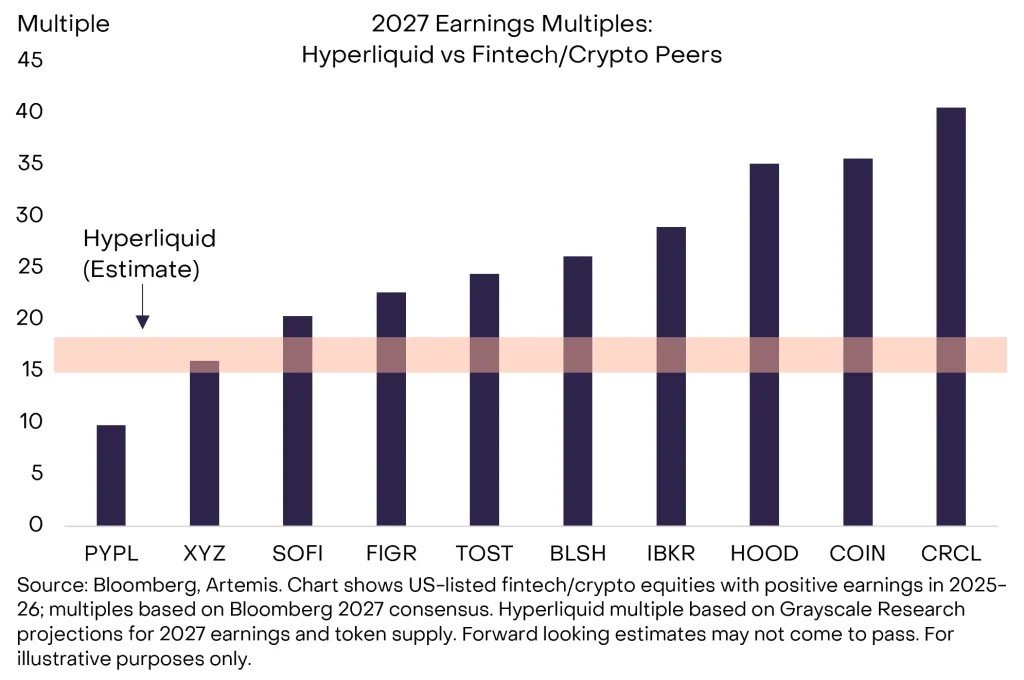
Not everyone is looking at the token through the same lens. Grayscale argued that $HYPE trades at a forward multiple of roughly 15x to 18x, adding that Hyperliquid generates real cash flows and therefore can be evaluated using earnings per token rather than earnings per share.
Based on that framework, Grayscale believes the asset still appears inexpensive compared with fintech companies such as Coinbase (COIN), Robinhood (HOOD), and Circle (CRCL).
From a perspective, It’s a reminder that market price and fundamental valuation don’t always move together.
Technical Levels Become The Next Battleground
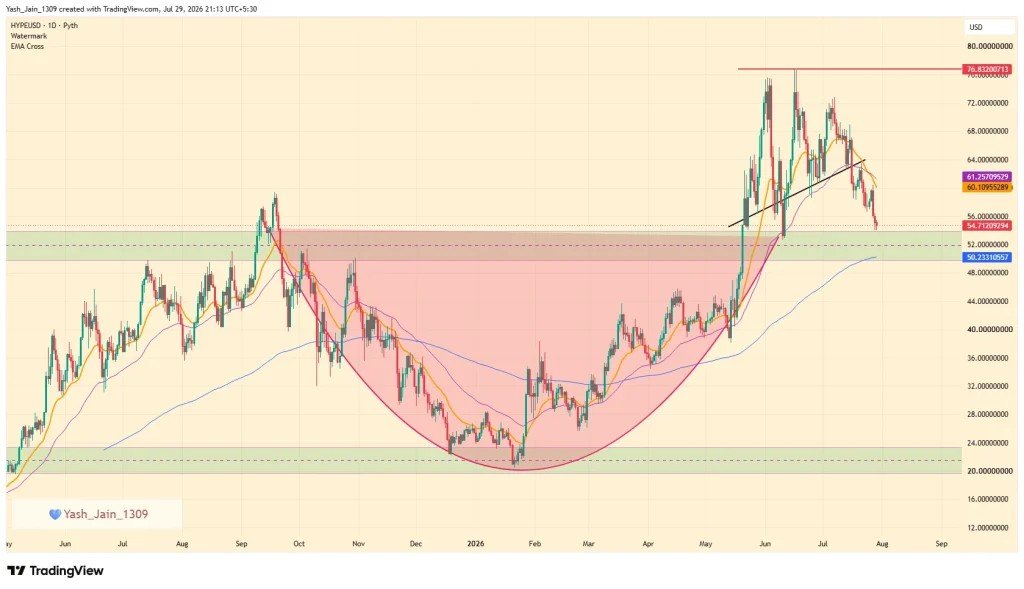
For now, the technical picture remains critical. If the $HYPE price drops by $54.37, attention shifts to the 200-day EMA near $50.23. However, if buyers defend that area, the recent June and July decline could eventually resemble a pullback within a broader rounded-bottom structure.
In that scenario, a successful rebound could reopen the path toward the previous $76.80 all-time high. If that resistance is reclaimed, the $100 level becomes a possible longer-term target. Until then, bulls must first prove they can halt the current wave of institutional selling.