
The S&P 500 could be headed for another 10% correction after failing to reclaim recent highs, according to a technical analysis by TradingShot.
In a TradingView post published on July 29, the analyst argued that the index is showing the same warning signs that preceded two major pullbacks over the past 18 months.
As of press time, the benchmark index was trading at 7,429, leaving room for a decline toward 6,865, a level representing about a 10% drop from current prices.
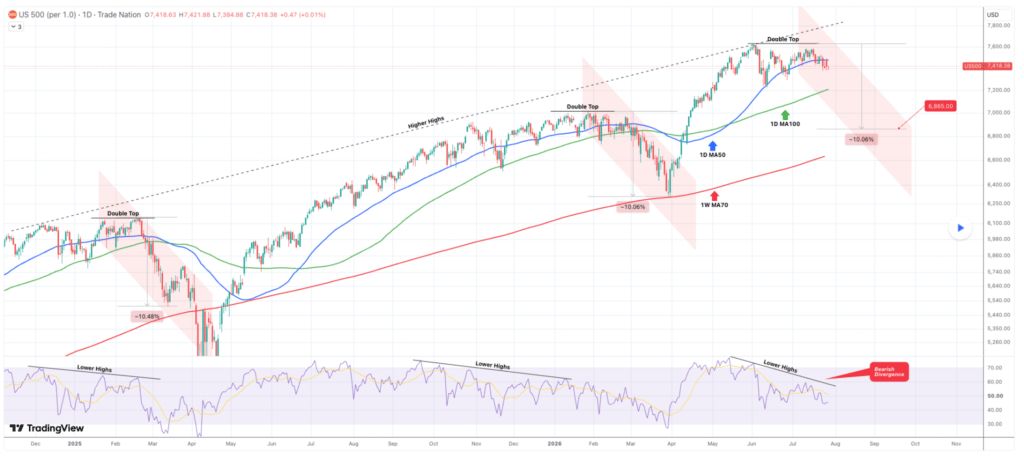
TradingShot highlighted that the S&P 500 has repeatedly failed to break above its 50-day moving average (MA50), which has now turned into a resistance level.
At the same time, the daily Relative Strength Index (RSI) has been forming lower highs, creating a bearish divergence.
According to the analysis, every instance in which this combination appeared during the current market cycle was followed by a correction of at least 10%.
Notably, the S&P 500 is developing a double-top formation near recent highs around the 7,600 level. The pattern emerged after the index failed to establish a new record high despite a strong rebound from the April lows.
TradingShot noted that a similar setup appeared in February 2026 before a market decline of 10.06%. That correction eventually found support at the 70-week moving average (MA70).
An earlier example occurred in February 2025 ahead of heightened U.S.-China trade tensions. The first leg of that sell-off reached 10.48% and also bottomed near the same long-term moving average.
Based on those historical precedents, the analyst believes the current structure carries a high probability of triggering another decline toward 6,865, where the 70-week moving average is projected to provide support.
S&P 500 fundamentals clash with technical outlook
The bearish technical forecast comes despite a strong year for U.S. equities. The S&P 500 remains near record territory after posting its strongest quarterly performance since 2020.
The benchmark index has gained roughly 9.5% year-to-date, supported by robust corporate earnings, resilient economic data, and continued investment tied to artificial intelligence.
Second-quarter earnings growth has exceeded expectations, while analysts have continued raising profit forecasts for 2026 and 2027. Wall Street strategists generally maintain year-end targets between 7,700 and 8,100, implying further upside from current levels.