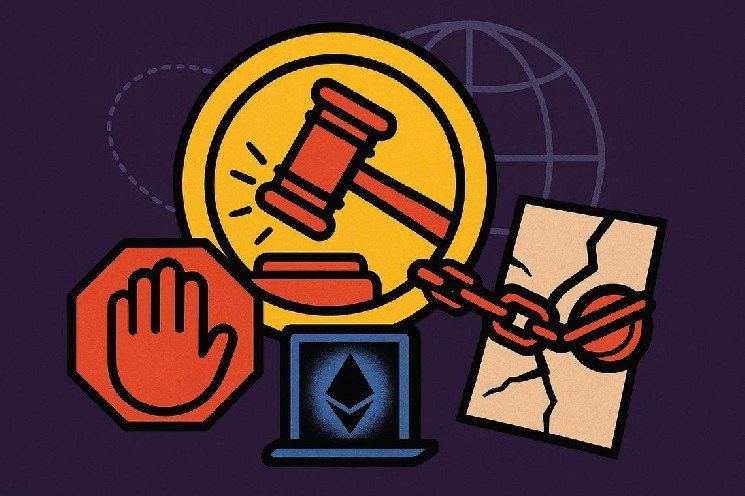
There is a version of Changpeng Zhao that launched Binance in July 2017 with a sharp eye for product and an almost total blind spot for legal risk. That version, CZ now admits, cost him more than he expected. In a July 16 interview with the Talking Tokens Podcast, the Binance founder said that if he could return to that moment, his first move would be to learn more about law, compliance, and politics — three areas he badly underestimated while building one of the world’s largest crypto exchanges.
Key takeaways
- CZ said in a July 16 Talking Tokens Podcast interview that he would tell his 2017 self to learn far more about law, compliance, and politics.
- He focused early on products and security, while legal considerations fell to the background.
- Some U.S. laws carry global reach and long lookback periods, a complexity CZ says caught him off guard.
- He advises entrepreneurs to launch products early and refine them through real market feedback.
- CZ regrets not launching Binance Futures sooner, citing timing as one of his clearest missed opportunities.
CZ Reflects on Early Underestimation of Legal and Political Knowledge
Looking back at Binance’s earliest days, CZ is candid about where his priorities were — and where they weren’t. He was laser-focused on building the product and locking down security. Legal issues were, at best, secondary. That imbalance, he now believes, was a significant miscalculation.
His advice to his younger self is direct: learn more about law, compliance, and politics before you need to. Not after a problem surfaces. Not once regulators come knocking. Before any of that. It is the kind of lesson that sounds obvious in retrospect but rarely gets the attention it deserves when a founder is racing to ship something into the market.
The gap between product ambition and legal awareness is a familiar tension in tech entrepreneurship. But in crypto, that gap has proven particularly costly for founders who operated across borders, often without a clear sense of which rules applied to them and which jurisdictions were watching.
The Impact of Cross-Jurisdictional Laws and U.S. Legal Reach
One of the more striking parts of CZ’s reflection is his acknowledgment that laws do not stop at national borders. Some U.S. laws carry extraterritorial reach, meaning they can apply to companies and individuals operating far outside American soil. Compounding that, certain statutes come with long lookback periods — allowing regulators and prosecutors to examine conduct that happened years in the past.
For a crypto exchange that grew rapidly across dozens of markets simultaneously, that complexity was not a minor footnote. It was a structural risk. CZ’s comments suggest he came to understand the full weight of cross-jurisdictional legal exposure later than he should have.
This is a signal worth noting for any founder operating in crypto today. The regulatory environment has only grown more interconnected since 2017. What happens in one jurisdiction increasingly shapes outcomes in others, and U.S. enforcement patterns in particular tend to cast a long shadow over global crypto operations.
Entrepreneurial Advice: Launch Early and Iterate with Market Feedback
Despite the legal lessons, CZ’s core entrepreneurial instinct has not changed. Entrepreneurs should launch products early and refine them through market feedback, he argued in the same interview. The market will teach you things no amount of internal planning can anticipate.
That philosophy drove Binance’s rise. The exchange moved fast, iterated quickly, and captured an enormous share of global crypto trading volume in a short window. Speed to market was a genuine competitive weapon. The lesson CZ is offering now is not to abandon that approach — it is to carry legal and compliance awareness alongside it, rather than treating the two as mutually exclusive.
That balance is harder to strike than it sounds. Legal infrastructure takes time and money to build, and in the early stages of a startup, those resources are scarce. But CZ’s experience illustrates what the cost of delay can look like at scale.
Regrets on Product Launch Timing and Balancing Legal Awareness
On the product side, CZ also pointed to a more specific regret: he wishes he had launched Binance Futures sooner. The derivatives product became a major revenue and volume driver for the exchange, and in hindsight, waiting was a missed opportunity. Fast iteration, applied earlier to the right products, could have compounded Binance’s growth trajectory even further.
Taken together, CZ’s reflections point to a dual blind spot in his early leadership — one legal, one commercial. He underestimated how quickly legal complexity would catch up with a globally operating exchange, and he was slower than he wanted to be in rolling out a product that clearly had strong demand. Both gaps, he suggests, are correctable with sharper awareness from the start.
For the next generation of crypto founders, the message is not just about compliance checklists or product roadmaps. It is about the kind of institutional knowledge — legal, political, commercial — that rarely makes it into pitch decks but shapes whether a company survives long enough to matter.
FAQ
What legal areas did CZ feel he underestimated early on?
CZ said he underestimated knowledge of law, compliance, and politics in the early days of Binance, including how laws apply across jurisdictions and the global reach and long lookback periods of some U.S. laws.
How does CZ suggest entrepreneurs balance product development with legal considerations?
He advises launching products early and improving them through market feedback, while paying attention to legal and compliance aspects from the start rather than treating them as secondary concerns.
What regret did CZ express about Binance Futures?
CZ regretted not launching Binance Futures sooner, viewing the delay as a missed commercial opportunity given the product’s eventual success as a major part of Binance’s business.
Why are U.S. laws particularly significant according to CZ?
Because some U.S. laws have global reach and long lookback periods, they can affect crypto firms operating outside the United States — a complexity CZ says he did not fully appreciate when building Binance in its early years.
Article produced with the assistance of artificial intelligence and reviewed by the editorial team.