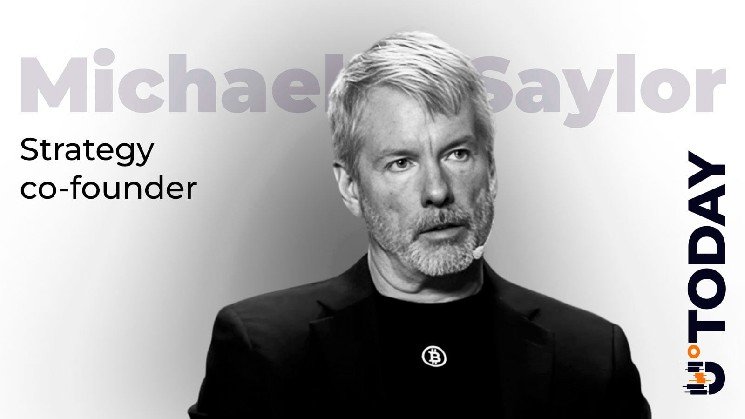
Strategy (formerly MicroStrategy) Executive Chairman Michael Saylor laid out a new logic for cryptocurrency accumulation in a recent post. According to him, Bitcoin's breakthrough lies in the ability to "convert economic energy into digital form and securely bind it to a person, family, company, machine, or state."
This statement immediately explains the changes taking place on Strategy's own balance sheet, as the company is now shifting from passively holding coins to building a closed-loop corporate economy.
Saylor's logic meets market gravity
The attempt to "securely bind energy to a company" is already reflected in record figures: according to its financial statements, Strategy holds 840,447 BTC on its balance sheet — exactly 4% of Bitcoin's total supply — worth $64.9 billion.
In practice, however, this "bound value" is now undergoing a severe crash test against market gravity. The company's position remained under intense accounting pressure for a long time, and it managed to return to a net unrealized gain of $1.4 billion only because of Bitcoin's price surge this week.
Bitcoin's most profound breakthrough is the ability to convert economic energy into digital form and bind it securely to a person, family, company, machine, or nation.
— Michael Saylor (@saylor) August 23, 2026
The practical bridge for "binding energy to machines and commercial entities" has become Strategy's own $13.37 billion Digital Credit sector. Strategy channels Bitcoin's digital energy into a collateral base, issuing tokenized obligations with fixed yields against it.
The viability of Saylor's theory about the strength of this bond is being tested under stress. When the flagship STRC token fell below par over the summer, management did not liquidate the Bitcoin collateral.
Instead, Strategy used fiat reserves to repurchase the obligations, bringing STRC back to $96.22. Strategy's current figures show that the company is attempting to turn Bitcoin into a working foundation for corporate debt.
Nevertheless, this attempt to permanently "lock economic energy" into digital code still depends on the cycles of the traditional financial market.