
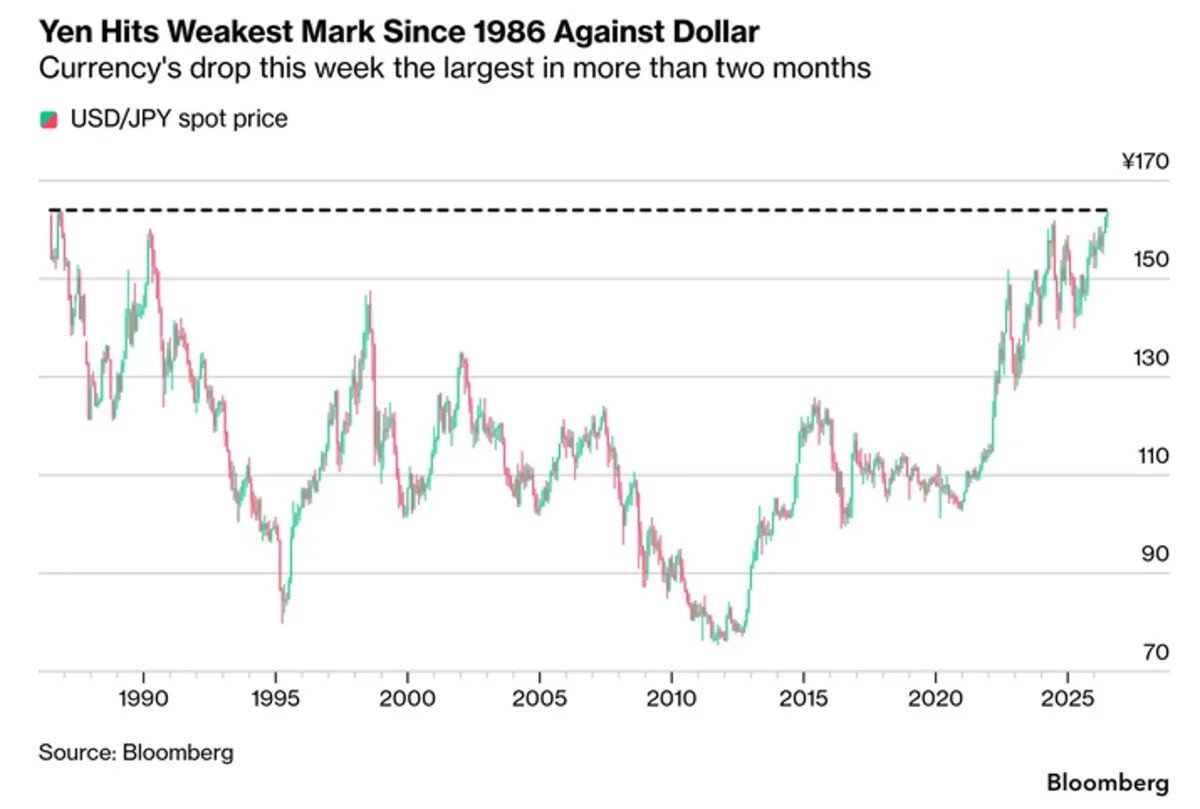
The Japanese yen (JPY) has fallen below 163 against the US dollar, reaching its weakest level in roughly 40 years. Global Markets Investor analysts said the currency also posted its largest weekly decline in more than two months.
The move pushed USD/JPY to levels last seen in 1986. Analysts linked the yen’s decline to the wide interest-rate gap between Japan and the United States, elevated oil prices and growing concerns about Japan’s fiscal position.
Why the Japanese Yen Is Falling
Hedge funds have increased their bearish bets against the yen to 114,030 contracts, according to CFTC data cited by Global Markets Investor. The positions were worth approximately $8.7 billion, placing them close to their highest level since 2008.
Analysts identified three main forces weighing on the Japanese currency: higher US interest rates, expensive energy imports and concerns about Japan’s public finances.
The Bank of Japan has also acknowledged the risks created by a weaker currency. Officials said the central bank could raise rates more frequently than once every six months, while warning that continued yen depreciation could add to inflation through higher import costs.
However, markets are not expecting an immediate policy shock. Analysts anticipate that the Bank of Japan will keep its benchmark rate unchanged on July 31 after raising it to 1% in June, its highest level in 31 years.
Warnings of possible government intervention have so far done little to stop the decline. Global Markets Investor said USD/JPY could continue moving toward 165 unless authorities take stronger action or the interest-rate outlook changes.
Why the Yen’s Decline Matters for Bitcoin and Crypto
The yen’s weakness matters beyond the foreign-exchange market because of its role in the global carry trade.
For years, investors have borrowed yen at relatively low interest rates and used the funds to buy higher-yielding or riskier assets. Those positions can include stocks, bonds, Bitcoin and other cryptocurrencies.
As long as the yen remains weak and Japanese borrowing costs stay low, the strategy can support demand for risk assets. Cheap funding allows investors to maintain leveraged positions and move capital into markets offering higher potential returns.
The main danger is a sudden reversal.
If the Bank of Japan accelerates rate hikes or the yen strengthens sharply, investors may begin unwinding carry-trade positions. That process can force them to sell risk assets, repay yen-denominated loans and reduce leverage across global markets.
A similar scenario played out in August 2024, when a rapid yen rally contributed to the unwinding of carry trades. Stocks and cryptocurrencies then suffered one of their sharpest sell-offs of the year.
There is no clear sign that another major unwind is imminent. However, the Bank of Japan’s July 31 decision could become an important market catalyst.
For crypto investors, the key question is whether the yen remains a source of cheap global liquidity or becomes the trigger for another wave of deleveraging.