
Bitcoin recovered sharply in early July, but traders are still waiting for confirmation that the rebound can turn into a broader trend reversal.
On July 6, Bitcoin rose to $64,657 on Bitstamp, up 11.7% from the sub-$58,000 level reached on July 1. A pullback followed, with $BTC falling to $62,417 by July 8.
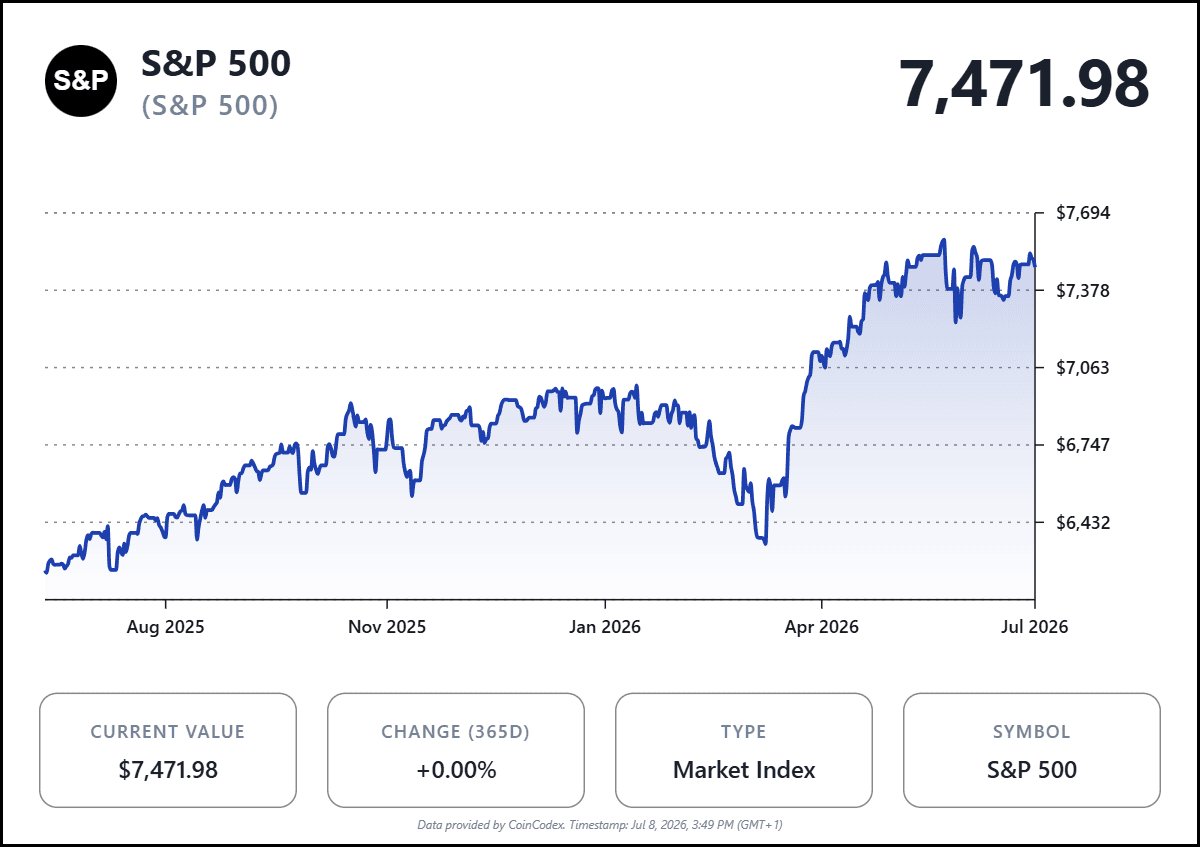
The move came as U.S. stocks also weakened. The S&P 500 fell by 0.6%, while the Nasdaq 100 dropped by 2.1%. Chipmakers were among the biggest contributors to the decline, with Micron Technology losing more than 9%.
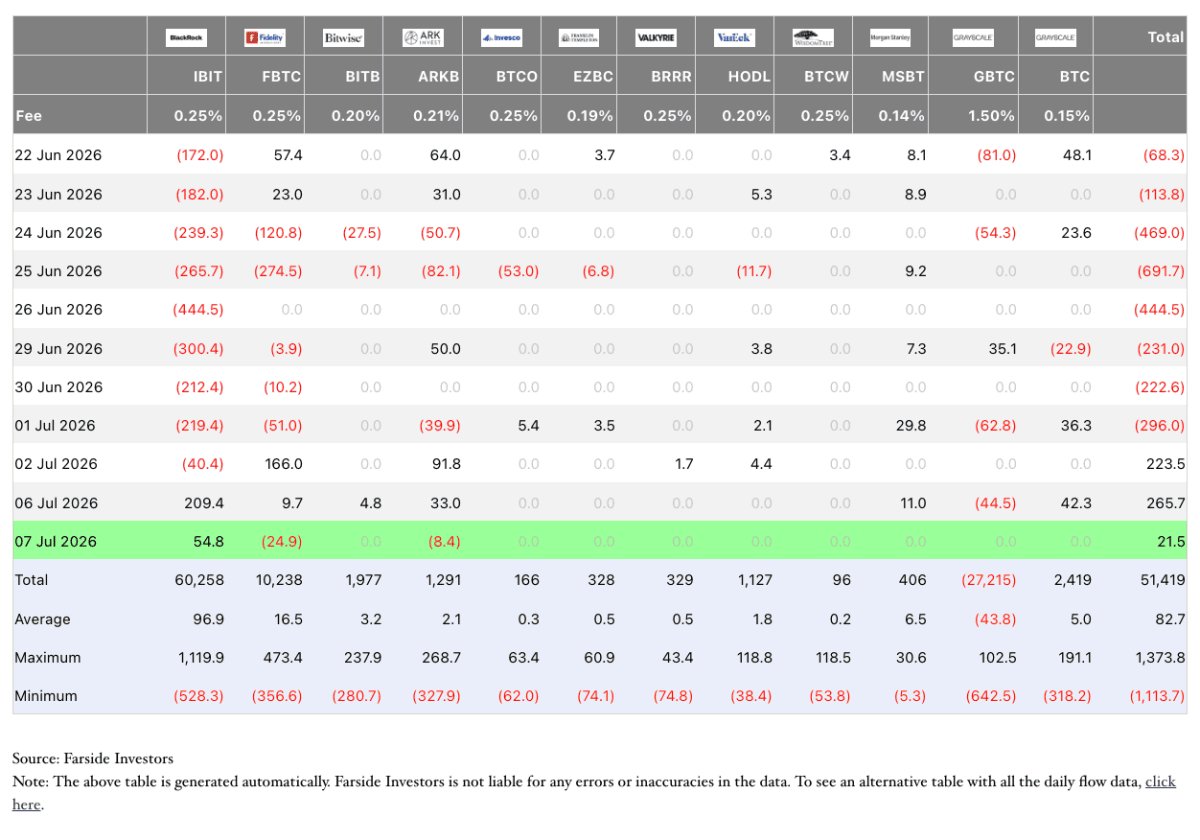
Despite pressure from equities, Bitcoin avoided a much deeper pullback. One possible support factor was renewed demand from U.S. spot Bitcoin ETFs, which recorded capital inflows for the third consecutive day.
Bitcoin Holds Firm as ETF Inflows Return
Bitcoin’s ability to hold near $63,000 stands out because the pullback happened alongside weakness in U.S. tech stocks. In previous market phases, $BTC has often followed broader risk assets lower when equity sentiment deteriorated.
This time, however, spot Bitcoin ETF inflows may have helped soften the pressure. Continued ETF demand can provide a stabilizing force, especially when short-term traders are reacting to stock-market volatility.
Still, the setup remains mixed. Bitcoin has recovered from its recent low, but it has not yet confirmed a full bullish reversal. That leaves traders focused on whether $BTC can hold current levels and build momentum above its recent high.
Bollinger Says Bitcoin Is at a Critical Point
John Bollinger, creator of the Bollinger Bands indicator, said Bitcoin is now at a “critical point.” In a discussion on X, he pointed to a possible W-shaped reversal pattern forming on the daily chart.
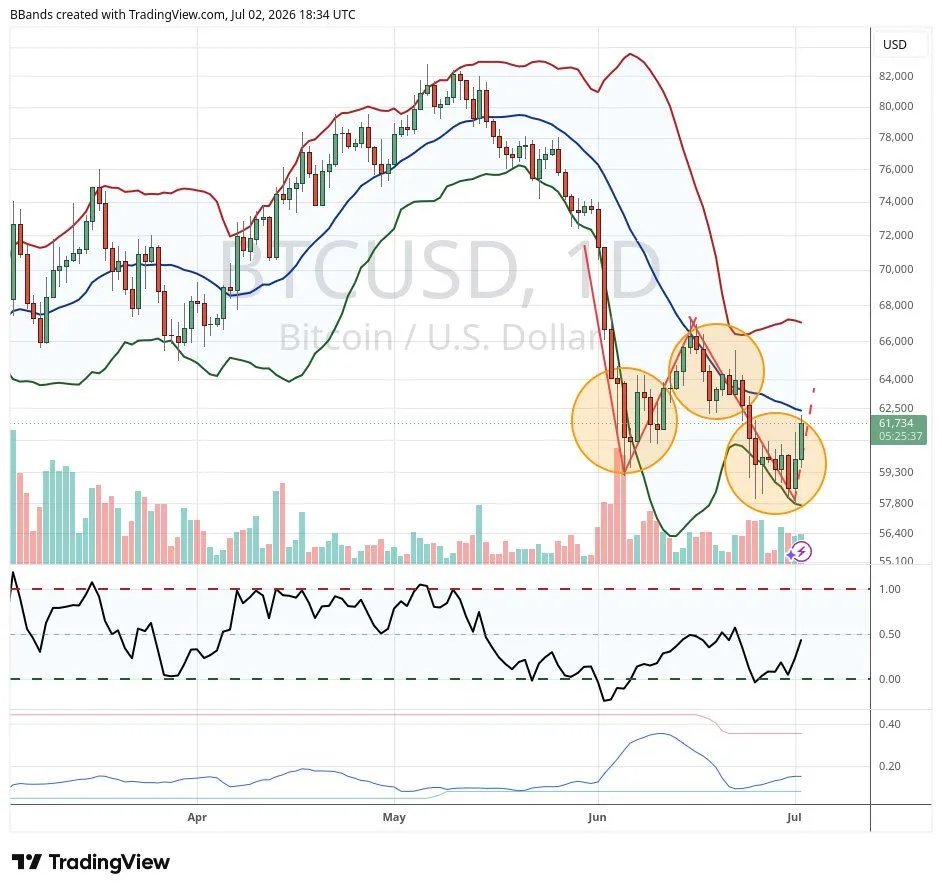
Last week, Bollinger suggested that completion of this pattern could mark a reversal of Bitcoin’s recent downtrend.
“We're at a critical point,” he said. “In a bear market, bullish setups break down, and in a bull market, bearish setups break down. Therefore, if the W-pattern is confirmed, I'll take it as a sign of a trend reversal.”
That makes the next few sessions important for Bitcoin bulls. If the pattern confirms, it could strengthen the case for a move higher. If it fails, $BTC may remain vulnerable to another leg lower.
Traders Remain Divided on Bitcoin’s Next Move
Crypto trader and analyst Michaël van de Poppe also weighed in on Bitcoin’s current structure, arguing that the market may be in the late stages of a bearish phase.
Among the signs he cited were positive news having little impact on price, sentiment turning heavily bearish, and some investors shifting from bullish to bearish forecasts. He also noted that many market participants are still calling for much lower $BTC targets, including the $30,000 range.
Van de Poppe pointed to several negative market narratives, including tariff concerns, geopolitical tensions, pressure from the AI trade, and broader risk-off sentiment. Despite those factors, he said Bitcoin has continued to hold near $63,000 and argued that there is no clear reason to assume $BTC must fall into the $30,000–$40,000 range.
For now, Bitcoin is consolidating below its recent high while traders weigh conflicting signals. On one side, tech-stock weakness and risk-off sentiment remain concerns. On the other, ETF inflows and a possible W-shaped reversal are giving bulls a stronger short-term argument.